Urolithin A
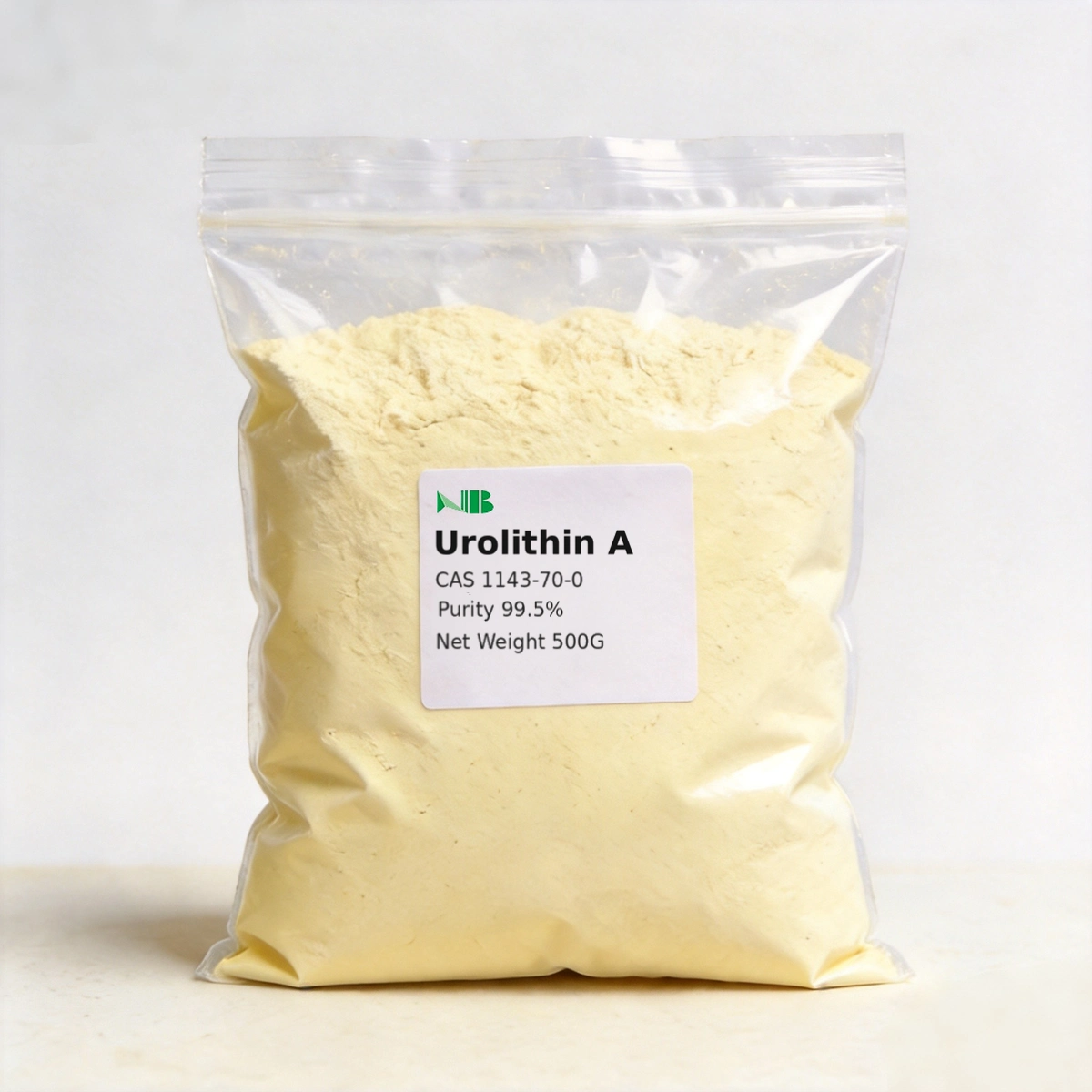
CAS 1143-70-0 — Research-Grade Mitophagy Inducer
Direct-from-manufacturer supply of synthetic Urolithin A for preclinical and analytical laboratories: 99.5% HPLC purity, batch-level chromatographic data published on this page, and a packing ladder that runs from a 100 mg evaluation pack to 10 kg commercial batches.
Compound Identity
CAS: 1143-70-0
Formula: C13H8O4
MW: 228.20 g/mol
IUPAC: 3,8-dihydroxy-6H-dibenzo[b,d]pyran-6-one
Class: Dibenzopyranone (urolithin)
Precursor: Ellagitannins (pomegranate, walnut)
InChIKey: RIUPLDUFZCXCHM-UHFFFAOYSA-N
PubChem CID: 5488186
Appearance: Off-white to pale yellow powder
Purity: ≥98% spec; 99.5% by HPLC (current batch)
Storage: −20 °C, protected from light and moisture
Use: For Research Use Only
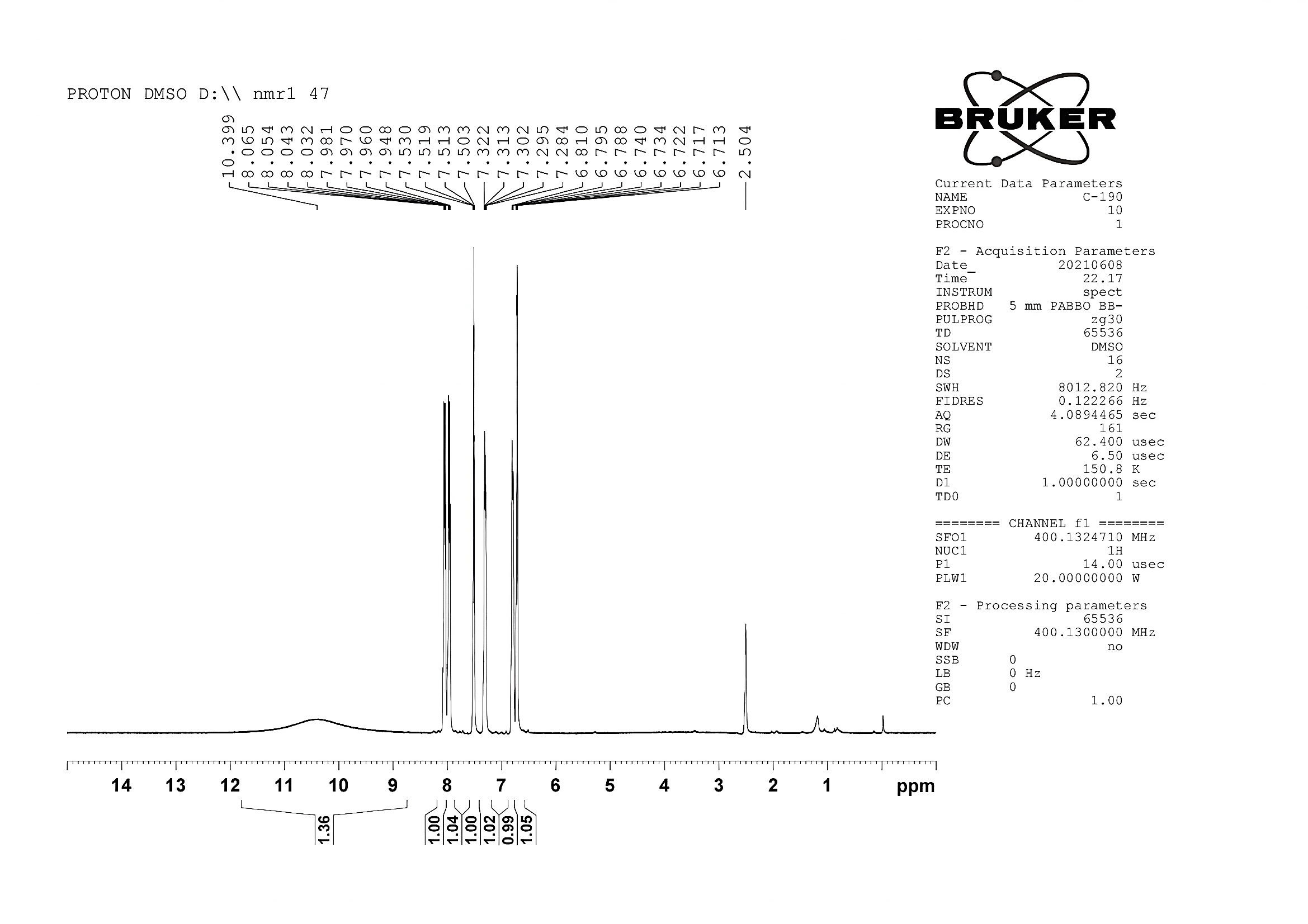
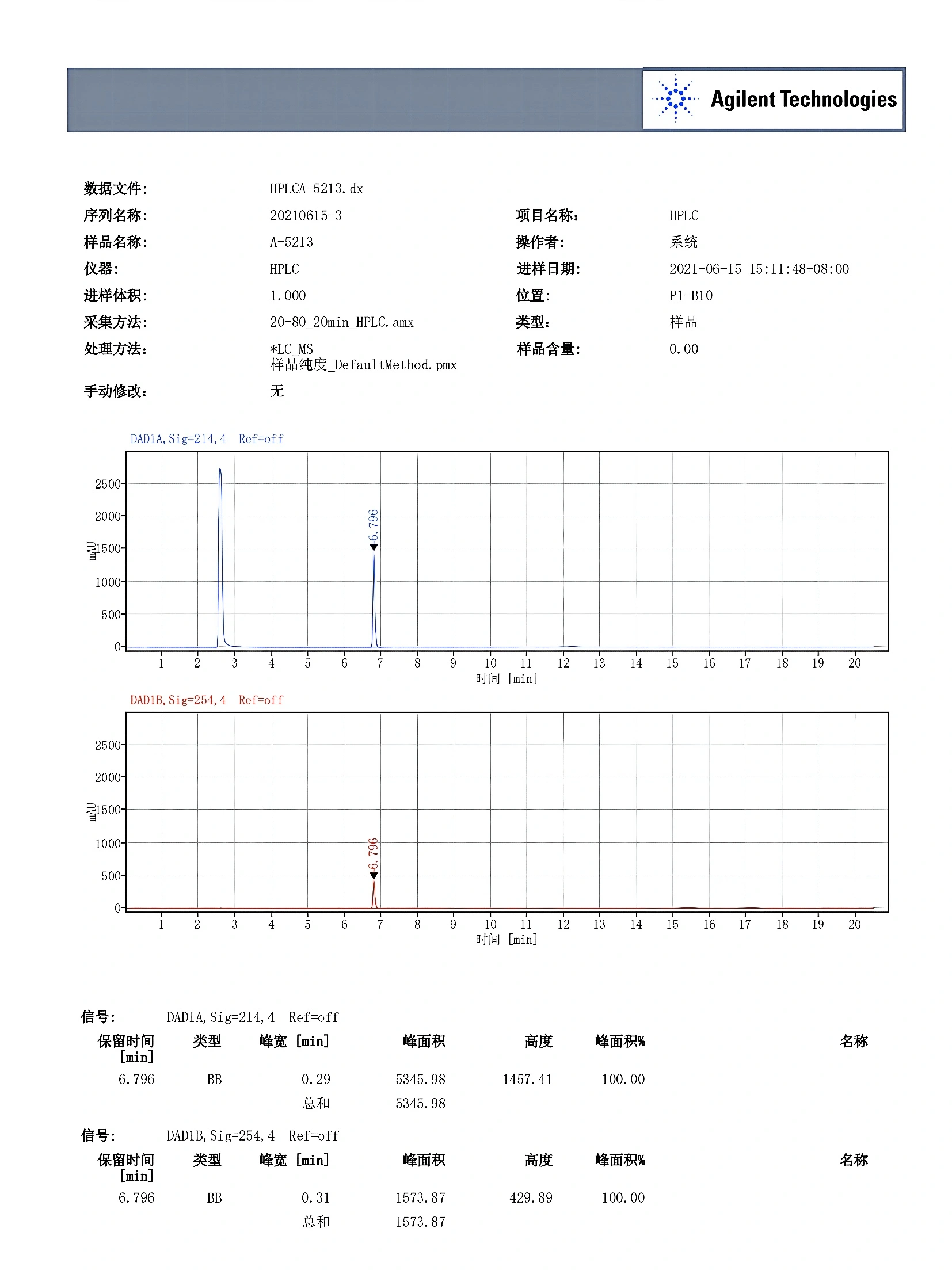
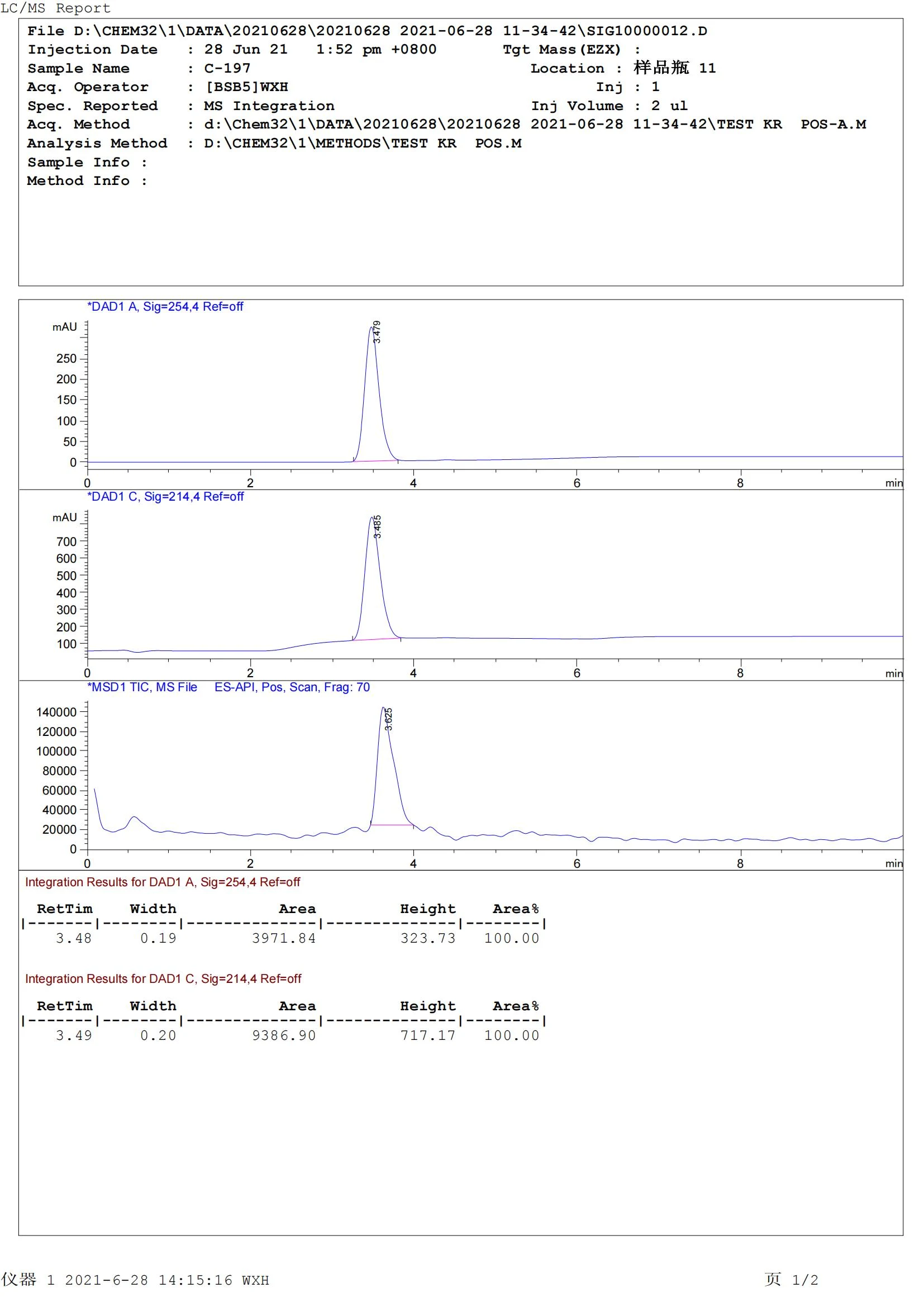
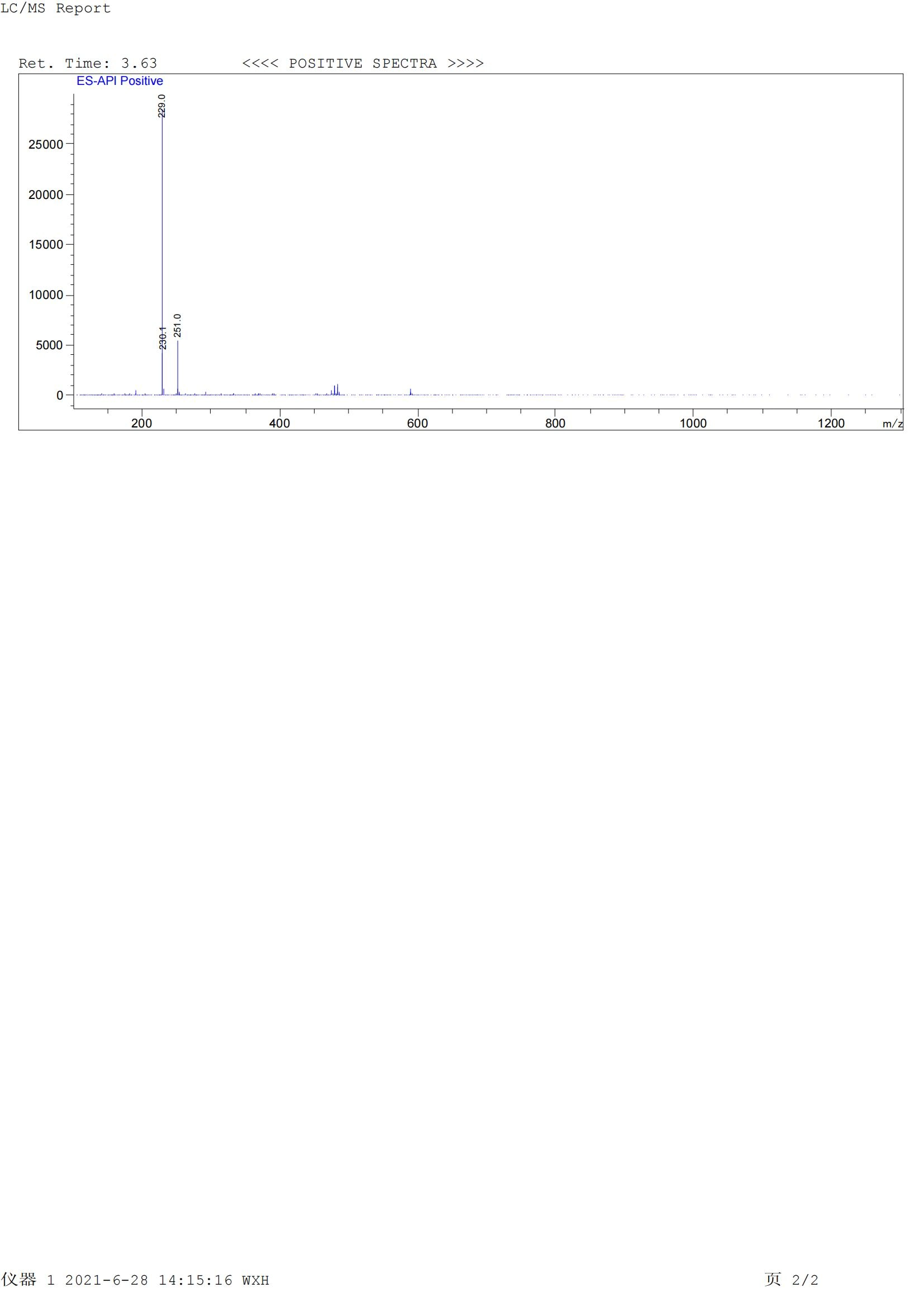
Batch Analytical Data: HPLC, LC-MS and 1H NMR
Every quotation from NutraBiotechChem is backed by batch-specific instrumental data. The full data package behind the current Urolithin A batch is reproduced below — the same spectra and chromatograms ship as PDFs with each order.
| Parameter | Result | Method / Comment |
|---|---|---|
| Appearance | Off-white to pale yellow powder | Visual, against reference |
| Identity — MS | m/z 229.0 [M+H]+; 201.0 (loss of CO) | LC-MS, ESI positive |
| Identity — NMR | 7 signals, 10.40–7.32 ppm, integral ratios consistent | 1H NMR, 400 MHz, DMSO-d6 |
| Purity @ 214 nm | 100.00 area% (single peak) | HPLC-DAD |
| Purity @ 254 nm | 100.00 area% (single peak) | HPLC-DAD |
| Purity on batch label | 99.5% | Label specification, batch 500 g pack |
| Impurity screen | No ellagic acid (m/z 303) detected | LC-MS, precursor carryover check |
| RT consistency | HPLC 6.796 min · LC-MS TIC 3.63 min | Different methods — both single-peak |
Report sample references: HPLC sample A-5213 (2021-06-15), LC-MS sample C-197 (2021-06-28), NMR acquisition 2021-06-08. Reports from different instruments in the same release workflow carry different sample codes; the PDF package shipped with an order pairs all documents to the same batch number. A fuller specification breakdown is maintained on the Urolithin A product page.
Urolithin A from the Manufacturer
What research-grade Urolithin A actually is, how it is produced, and why the analytical package matters as much as the purity number.
Urolithin A (CAS 1143-70-0) is a dibenzopyranone metabolite produced in nature by gut microorganisms from ellagitannins and ellagic acid found in pomegranate, walnut and berry sources. Because the metabotype that converts these precursors into urolithin A is present in only a fraction of the population, essentially all laboratory work uses synthetic Urolithin A that is structurally identical to the microbial metabolite — which is exactly what NutraBiotechChem supplies.
The compound is the most widely cited small-molecule inducer of mitophagy, the selective autophagic clearance of damaged mitochondria, and has become a standard tool compound in mitochondrial quality-control, bioenergetics and gut-microbiota metabolite pharmacology research. Publication volume on urolithin A has grown steadily since the first mitophagy characterization studies, which keeps demand high across both milligram research packs and multi-kilogram screening programs.
For procurement teams, two practical realities drive sourcing decisions. First, "99% Urolithin A" is not a specification until the method is stated — HPLC wavelength, gradient and integration basis all change the number. Second, the difference between an importable, experiment-ready batch and a failed one is usually the documentation package, not the price. Both points are addressed head-on in the pricing and documentation sections below.
NutraBiotechChem supplies Urolithin A across a six-step packing ladder (100 mg to 10 kg), supports custom purity targets and custom synthesis of urolithin analogs, and ships every pack with its batch certificate of analysis. The material is supplied strictly for research use only and is not offered for human or veterinary use.
Why Laboratories Buy Urolithin A
The research logic behind demand — from precursor metabolism to the readouts that end up in study protocols.
A gut-microbiota metabolite
Ellagitannins are converted by gut bacteria through urolithin M5 to urolithin A; individuals fall into metabotypes producing urolithin A, B or neither (0). Synthetic supply removes this biological variability from experiments.
Mitophagy induction
Urolithin A induces selective mitophagy and promotes autophagosome–lysosome flux (LC3-I to LC3-II conversion) in cellular models, without acting as a protonophoric uncoupler. This distinguishes it from CCCP/FCCP-type controls.
Downstream readouts
Published cellular readouts include mitochondrial respiration metrics, mtROS, mitochondrial membrane potential markers, AMPK and PI3K–Akt–mTOR pathway modulation, and AhR binding — the assays most procurement requests are built around.
Purity Grades & Pricing Logic
There is no single "price of Urolithin A". The quotation is an output of the specification — here is exactly how it is built.
| Grade | Specification | Typical Use | Lead Time |
|---|---|---|---|
| ≥98% (HPLC) | Catalog grade, method stated on COA | In-vitro mechanism studies, formulation feasibility, exploratory work | In stock |
| ≥99% (HPLC) | Extra purification step, batch-quoted | Quantitative reference work, method validation, stability studies | Made to order |
💰 Seven Variables Behind Every Quote
- Quantity100 mg → 10 kg
- Purity grade≥98% or ≥99%
- Analytical scopeHPLC / MS / NMR / residual solvents
- Document packageCOA, chromatograms, TDS
- Packaging formatVial vs aluminium pouch
- Delivery termsEXW / FOB / CIF / DDP
- Payment & lead timeCase by case
📈 Pack Ladder & Unit-Cost Logic
- 100 mg — evaluationIn stock
- 1 g — study scaleIn stock
- 10 g — screening roundsIn stock
- 100 g — pilot scaleMade to order
- 1 kg — commercialMade to order
- 10 kg — industrialMade to order
Per-gram cost is highest at 100 mg and can be an order of magnitude lower at 10 kg, because weighing, filling and per-batch HPLC release are fixed costs. The curve flattens noticeably between 10 g and 100 g. A full buyer's guide — including total-cost-of-ownership items such as freight, duties and arrival re-testing — is published in the Urolithin A price analysis article.
Research & Procurement Applications
Where Urolithin A from NutraBiotechChem is routinely specified by purchasing teams.
Mitophagy & Autophagy Research
Standard tool compound for mitophagy induction and autophagosome–lysosome flux assays, alongside classical controls.
Cell biologyMitochondrial QC & Bioenergetics
Used in respiration assays, mtROS and mitochondrial membrane-potential measurement panels in academia and CROs.
BioenergeticsGut-Metabolite Pharmacology
Model microbial metabolite for studies on the colonized-gut chemistry axis; pairs naturally with urolithin B sourcing programs.
MicrobiotaAnalytical & Reference Work
≥99% material for method development, system suitability and quantitative reference standards.
AnalyticalInflammasome & Signaling Studies
Applied in NLRP3 inflammasome, NF-κB-linked and Nrf2/KEAP1 oxidative-stress readout panels.
Signal transductionFormulation & Scale-Up Development
Solubility, stability and excipient-compatibility screening, with 100 g – 10 kg supply for downstream programs.
Process developmentComparing urolithins? See the Urolithin A vs Urolithin B comparison and the Urolithin B 99% HPLC powder profile. For a mitochondrial-targeted peptide tool compound, NutraBiotechChem also supplies Elamipretide (SS-31).
Key Literature
Representative publications that reference urolithin A as a research compound.
Quality, Documentation & Shipping
The paperwork that decides whether a batch is usable on arrival — specified up front, not discovered at customs.
✅ Quality Control
- IdentityLC-MS + NMR
- PurityHPLC-DAD, 2 wavelengths
- Impurity screenPrecursor carryover
- AppearanceAgainst reference
- Batch traceabilityEvery pack numbered
📄 Documentation
- COABatch-specific PDF
- ChromatogramsHPLC, LC-MS included
- TDSOn request
- Origin / customsExport doc set
- Re-test supportArrival QC data
🚚 Shipping & Logistics
- Stock packsShips on schedule
- Custom batchesPer production plan
- IncotermsEXW / FOB / CIF / DDP
- Small packsAir freight preferred
- ClassificationNon-hazardous solid
Detailed logistics terms, packaging-in-transit and destination-storage guidance are on the shipping page. GMP-adjacent programs should budget for independent arrival re-testing — we release the instrument data needed to make that re-test meaningful. Every pack is labelled For Research Use Only and ships with its batch COA.
Frequently Asked Questions
Procurement-side questions we answer by email every week — collected here so the answers are available before the first inquiry.
Which purity grade should I order, ≥98% or ≥99%?
What pack sizes are available, and where do unit prices move most?
Can I get a sample before committing to a bulk order?
What documentation ships with each batch?
What are typical lead times for in-stock and made-to-order packs?
Which delivery terms do you support?
Is there a minimum order quantity?
Do you offer custom synthesis, custom purity or urolithin analogs?
How does Urolithin A differ from Urolithin B when sourcing both?
Is Urolithin A approved for human use?
Why Source Urolithin A from NutraBiotechChem
What a repeat-purchase supply relationship looks like in practice.
Batch-level transparency
Instrument data published before you buy — the HPLC, LC-MS and NMR package on this page is the actual release package for the current batch.
Manufacturer-direct
Synthesis and purification under one roof, which is what makes both the ≥98% stock grade and made-to-order kilogram batches possible.
Direct technical line
Quotations, COA copies and specification questions answered by the technical team — typically within one business day.
Export experience
Research-chemical export documentation, non-hazardous freight handling and Incoterm flexibility for EU, US and Asia destinations.
Request Your Urolithin A Quotation
Send the pack size, grade and destination — a batch-data-backed quotation comes back within one business day. Samples start at the 100 mg research pack.
Request QuotationOr reach the team directly via WhatsApp (+86 177 8639 4783) or the contact page.
For Research Use Only. Urolithin A (CAS 1143-70-0) supplied by NutraBiotechChem is a laboratory research chemical, not a drug, food additive or dietary supplement ingredient, and is not approved for human or veterinary use by FDA, EMA or any other regulatory authority. Statements on this page describe the research material and its documentation, and are not health or medical claims.
Explore the Urolithin A range: Product specifications page · Price & grade guide · All research chemicals