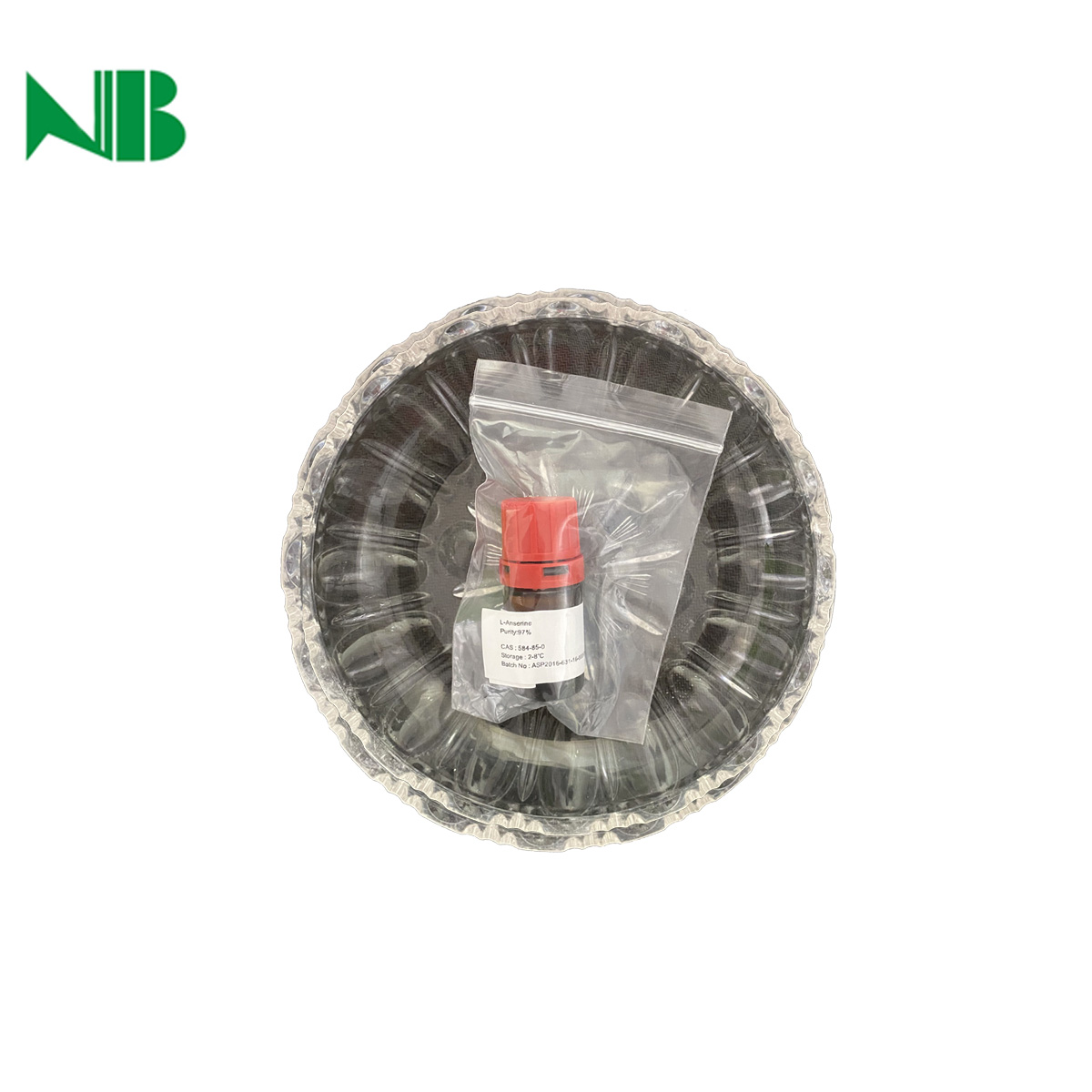
L-Anserine CAS 584-85-0
N-Methyl-Carnosine Dipeptide & Anti-Glycation Antioxidant
L-Anserine (CAS 584-85-0), beta-alanyl-3-methyl-L-histidine, is a naturally occurring dipeptide concentrated in fish and meat and abundant in human skeletal muscle. More stable than carnosine against serum carnosinase, it acts as a hydrophilic antioxidant and carbonyl-scavenger that protects proteins and lipids from glycation, lipoxidation and advanced glycation end-product (AGE) formation. Molecular formula C10H16N4O3, MW 240.26. Research-grade with COA.
Molecular Information
CAS: 584-85-0
Formula: C10H16N4O3
MW: 240.26 g/mol
Class: beta-Alanyl-3-methyl-L-histidine
Core: Methylated histidine dipeptide
Source: Fish / mammalian muscle
MP: 231-268 C (dec.)
Appearance: White to off-white powder
Synonyms: Anserine / Anserin
Storage: 2-8 C
Product Technical Specifications
Complete physicochemical properties and QC parameters for L-Anserine (CAS 584-85-0)
📋 Physicochemical Properties
- Product NameL-Anserine (Anserine)
- IUPAC Corebeta-Alanyl-3-methyl-L-histidine
- CAS Number584-85-0
- SynonymsAnserine; Anserin; N-beta-alanyl-3-methylhistidine
- Molecular FormulaC10H16N4O3
- Molecular Weight240.26 g/mol
- SourceFish & mammalian skeletal muscle
- AppearanceWhite to off-white powder
- Melting Point231-268 C (decomposition)
- Water SolubilitySlightly soluble
- Organic SolubilityMethanol (heated)
- Compound ClassCarnosine analog / methylated dipeptide
- HS Code2933.29
🔬 Quality Control & Handling
- Purity (HPLC)≥97%
- FormNeat solid / powder
- Primary TargetReactive carbonyls / glycation & oxidation machinery
- Assay ReadoutAGE inhibition; ROS / lipid-peroxidation reduction
- MicrobiologyLow bioburden, suitable for cell studies
- Storage Condition2-8 C, sealed, protect from light
- Solution StabilityPrepare fresh in water / mild acid; avoid prolonged ambient storage
- ShippingRoom temperature or cool pack
- QC DocumentationCOA / HPLC / NMR / MS / MSDS
- Pack Sizes1g / 5g / 10g / 100g / 1KG
- Stock StatusIn Stock
- Use StatementResearch use only; not for human/clinical use
Key Molecular Targets & Pathway Nodes
Anserine is a direct chemical antioxidant rather than a receptor ligand; its biological reach spans metabolic, muscular and aging-relevant nodes where carbonyl stress and glycation drive dysfunction.
How L-Anserine Works: Carbonyl Trapping and Redox Buffering
Anserine protects proteins and membranes by acting as a sacrificial nucleophile and metal-chelating antioxidant
Methylated, Carnosinase-Resistant Scavenger
Anserine is the N-methyl derivative of carnosine. The 3-methyl group on the imidazole ring makes it a poor substrate for serum carnosinase, so unlike carnosine it persists in circulation and tissues. This gives anserine a longer functional half-life as an endogenous antioxidant in muscle and brain.
Carbonyl Trapping & Anti-Glycation
The imidazole nitrogen acts as a nucleophile that traps reactive carbonyl species such as methylglyoxal and glyoxal before they cross-link with proteins to form advanced glycation end-products (AGEs). By intercepting these dicarbonyls, anserine slows Maillard-type protein damage implicated in aging, diabetes and muscle degeneration.
Redox Cycling & Metal Chelation
Anserine buffers ROS and RNS, protects membranes from lipid peroxidation (lowering MDA and 4-HNE), and chelates redox-active transition metals such as copper and iron, suppressing Fenton-type hydroxyl radical formation. The net effect is preservation of protein structure, enzyme activity and cellular redox balance under metabolic and exercise stress.
⚖️ Anserine vs Carnosine vs Balenine
- Carnosinebeta-Ala-L-His; carnosinase-labile; shorter systemic half-life
- Anserine (this product)beta-Ala-3-Me-His; carnosinase-resistant; enriched in human muscle
- Balenine / Ophidinebeta-Ala-1-Me-His; the 1-methyl isomer found in some meats
- EnzymeSerum carnosinase (CN1/CN2) degrades carnosine, spares anserine
- Tissue EnrichmentAnserine > carnosine in human and fish skeletal muscle
- Research UseAnti-glycation and antioxidant comparator in aging & metabolic models
♻️ Downstream Biological Consequences
- Protein DamageReduced AGE / cross-link formation
- Lipid PeroxidationLower MDA and 4-HNE formation
- Muscle FunctionPreserved contractile protein integrity under exercise
- Redox StateImproved GSH:GSSG balance in stressed cells
- Aging PhenotypeAttenuated proteostasis decline in models
- Metabolic HealthModest support of glucose handling in studies
Research Applications & Models
Anserine bridges nutritional biochemistry, sports physiology and geroscience — a natural dipeptide studied wherever carbonyl stress and oxidative damage accelerate tissue decline.
Sports & Exercise Physiology
Studied for its role in high-acid, high-demand skeletal muscle, where anserine buffers metabolic stress, supports calcium handling and may delay fatigue. Frequently paired with carnosine in muscle-composition and endurance research.
Muscle & RecoveryHealthy Aging & Proteostasis
Investigated as an endogenous anti-glycation defense that attenuates AGE accumulation in long-lived proteins (collagen, lens crystallins), relevant to skin, vascular and connective-tissue aging models.
Anti-GlycationMetabolic & Diabetic Research
Used to model dicarbonyl (methylglyoxal) detoxification pathways relevant to diabetes and complications; anserine supplementation studies probe AGE-mediated vascular and renal stress.
AGE / DicarbonylNeuroprotection
Explored for neuronal carbonyl-stress protection and metal-chelation benefits in models of oxidative injury and proteinopathy, where anserine's brain-relevant antioxidant profile is advantageous.
Redox / ChelationFood & Marine Bioactives
A key determinant of fish meat quality and a biomarker of species/freshness; studied in aquaculture and food-science contexts for oxidative stability and shelf-life.
Marine BioactiveAntioxidant Assay Standards
Employed as a positive comparator in ORAC, FRAP and carbonyl-trapping assays, and alongside carnosine/balenine to dissect imidazole-dipeptide structure-activity relationships.
Assay ReferenceCosmeceutical Research
Formulation ingredient studied for anti-AGE and anti-photoaging topical activity, leveraging its carbonyl-scavenging and metal-chelating chemistry.
Anti-Aging SkinCellular Redox Models
Used in cell-based studies of oxidative injury, doxorubicin cardiotoxicity and ischemia-reperfusion, where anserine reduces lipid peroxidation and preserves viability.
Redox StressKey Literature & Landmark Publications
Foundational work on imidazole dipeptides, glycation chemistry and muscle function.
Available Sizes & Ordering
Research-grade L-Anserine / Anserine (CAS 584-85-0) with full QC documentation; standard packs and bulk custom quantities supported.
| Tier | Pack Size | Stock Status | Suitable For | Lead Time |
|---|---|---|---|---|
| Standard | 1g | In Stock | Antioxidant & anti-glycation cell assays | Same/next-day ship |
| Medium | 5g | In Stock | Muscle, metabolic and aging models | Same/next-day ship |
| Large | 10g | In Stock | Long-term in vivo & formulation studies | Same/next-day ship |
| Bulk | 100g | In Stock | Food-science, cosmetic and process R&D | Quote to confirm |
| Industrial | 1KG | Made to order | Pilot/production scale, CMO supply | Batch delivery |
💡 Reference sizes shown above; for exact pricing and availability please contact us for a quote. Bulk orders qualify for tiered discounts.
Frequently Asked Questions (FAQ)
What is L-Anserine and how does it differ from carnosine?
What does anserine actually do at the molecular level?
Why is anserine interesting for aging and healthy-aging research?
Is anserine the same as balenine (ophidine)?
Is anserine soluble and how should it be prepared for lab use?
Does anserine have a role in sports-nutrition science?
Is QC documentation provided?
Need L-Anserine (Anserine) for Your Research?
Research-grade L-Anserine (CAS 584-85-0) — purity ≥97% HPLC, COA included
A carnosinase-resistant, anti-glycation antioxidant dipeptide for muscle, aging and metabolic research — request a quote today