
📑 Quick Navigation
- 1. Introduction: The Selank Peptide Family
- 2. Tuftsin — The Parent Molecule
- 3. Selank — The Stabilized Analog
- 4. NA-Selank — The Acetylated Derivative
- 5. Structural Evolution & Design Rationale
- 6. Mechanism of Action Comparison
- 7. Pharmacokinetics & Stability
- 8. Full Head-to-Head Comparison Table
- 9. Research Applications by Field
- 10. Sourcing & Quality Standards
- 11. Frequently Asked Questions
- 12. Conclusion & Key Takeaways
1. Introduction: The Selank Peptide Family
The Selank family represents one of the most fascinating examples of rational peptide drug design in modern pharmacology. At its core, this family spans three interconnected molecules — Tuftsin, Selank, and N-Acetyl Selank (NA-Selank) — each representing a distinct stage in the evolution from a naturally occurring immune peptide to a CNS-active anxiolytic compound with enhanced metabolic stability.
The story begins with Tuftsin (CAS 9063-57-4), an endogenous tetrapeptide (Thr-Lys-Pro-Arg) cleaved from the Fc domain of immunoglobulin G (IgG). Discovered in 1970 by Victor A. Najjar and Keisuke Nishioka at Tufts University, tuftsin is the body's natural activator of phagocytic cells — macrophages, monocytes, and neutrophils. However, its therapeutic utility is severely limited by an extraordinarily short plasma half-life measured in seconds.
In the 1990s, researchers at the Institute of Molecular Genetics (IMG) of the Russian Academy of Sciences addressed this limitation by extending tuftsin's C-terminus with a Pro-Gly-Pro tripeptide, creating Selank (CAS 129954-34-3) — a heptapeptide (Thr-Lys-Pro-Arg-Pro-Gly-Pro) with dramatically improved metabolic stability and an entirely new spectrum of CNS activity, including anxiolytic and nootropic effects. Selank was approved in Russia in 2009 as a prescription anxiolytic nasal spray (brand name Selanc) for generalized anxiety disorder (GAD).
The most recent iteration, N-Acetyl Selank (NA-Selank), applies N-terminal acetylation — a well-established pharmaceutical modification — to further protect the peptide from aminopeptidase degradation. While NA-Selank has no independent clinical validation, its structural logic is sound, and it represents the next generation of stability-optimized tuftsin analogs for research applications.
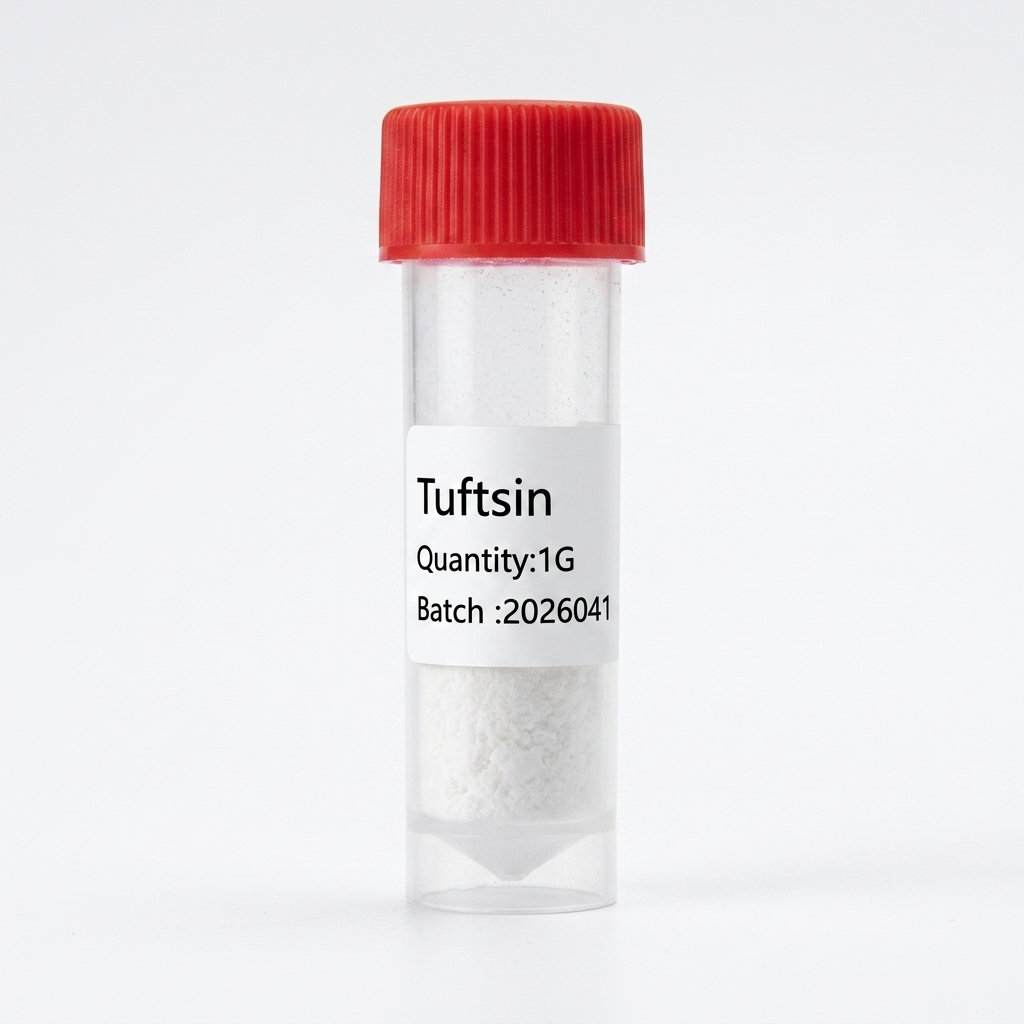
2. Tuftsin (CAS 9063-57-4) — The Endogenous Parent Molecule
📋 Tuftsin Quick Profile
Discovery and Biosynthesis
Tuftsin was first identified in 1970 by Victor A. Najjar and Keisuke Nishioka at the Tufts University School of Medicine in Boston, from which the peptide derives its name. It is not synthesized de novo but is generated through a unique two-step proteolytic processing pathway from the heavy chain of immunoglobulin G (IgG).
The active tetrapeptide corresponds to residues 289–292 of the CH2 domain of the IgG Fc region, located within a larger fragment called leukokinin. Liberation of the active tetrapeptide requires two sequential enzymatic cleavages:
→ Step 1: Tuftsin endocarboxypeptidase (spleen) cleaves Arg-292 / Glu-293
→ Step 2: Leukokininase (neutrophil membrane) cleaves Lys-288 / Thr-289
→ Active Tuftsin (Thr-Lys-Pro-Arg) released
This unique biosynthetic pathway — requiring both splenic processing and neutrophil membrane enzymatic activity — explains why splenectomy reduces circulating tuftsin levels by 60–70%, as demonstrated by Spirer et al. (1980) in 16 splenectomized patients. This organ dependency is unique among known peptide hormones and explains the well-known immunological vulnerability of asplenic patients to overwhelming infections, particularly with encapsulated bacteria.
Mechanism of Action: Immune Activation
Tuftsin's primary biological function is the stimulation of phagocytosis. The tetrapeptide binds to specific, saturable receptors on the surface of phagocytic cells with a dissociation constant (Kd) of approximately 10 nM, with an estimated 50,000–100,000 binding sites per cell. This high receptor density enables robust immune responses even at low tuftsin concentrations.
Downstream signaling events following tuftsin receptor engagement include:
- Calcium mobilization from intracellular stores
- Protein kinase C (PKC) activation
- Enhanced actin polymerization and pseudopod extension
- NADPH oxidase activation (respiratory burst → superoxide production)
- Increased membrane ruffling and particle engulfment
- IL-1 production by macrophages (dose-dependent, significant at 1 µM, maximal at 10–50 µM)
Key Biological Activities
- Phagocytosis enhancement: Active at concentrations as low as 10 nM; half-maximal stimulation at ~0.1–1 µM; maximal phagocytosis enhancement at 10–100 µM
- Respiratory burst stimulation: Dose-dependent NADPH oxidase-mediated superoxide production in human neutrophils (active from 0.1 µM, maximal at 10–100 µM)
- Tumoricidal activity: Enhances macrophage tumor-killing activity against K562 targets in a dose-dependent manner (0.1–100 µM)
- Chemotaxis and motility: Enhances directed migration and random motility of phagocytic cells
- Antibody formation influence: Modulates adaptive immune responses
3. Selank (CAS 129954-34-3) — The Stabilized Heptapeptide Analog
📋 Selank Quick Profile
Design Rationale: From Immune Peptide to CNS-Active Drug
Selank was developed at the Institute of Molecular Genetics (IMG) in Moscow in cooperation with the V.V. Zakusov Research Institute of Pharmacology. The design strategy was elegantly simple: take the biologically active tuftsin sequence (Thr-Lys-Pro-Arg) and extend it at the C-terminus with three natural L-amino acids (Pro-Gly-Pro) to improve metabolic stability and enable CNS penetration.
+ Pro-Gly-Pro extension →
Selank: Thr-Lys-Pro-Arg-Pro-Gly-Pro (7 residues, MW 751.9, t½ = minutes)
→ Improved stability ✓ | CNS activity ✓ | Anxiolytic ✓ | Nootropic ✓
This modification is pharmacologically significant because it did not merely extend half-life — it introduced an entirely new category of bioactivity. Native tuftsin has no documented anxiolytic or nootropic effects. The Pro-Gly-Pro extension conferred conformational properties that enabled interaction with CNS targets, transforming a peripheral immunomodulator into a dual-action neuroimmune peptide.
Mechanism of Action: Multi-System Neuroimmune Modulation
Selank exerts its pharmacological effects through multiple converging mechanisms that distinguish it from both classical anxiolytics and pure immunomodulators:
① GABAergic Modulation (Primary Anxiolytic Mechanism)
Selank's primary anxiolytic mechanism involves indirect allosteric modulation of GABA-A receptors. Rather than directly binding to the benzodiazepine site, Selank alters the expression of GABA-A receptor subunit genes, enhancing the receptor's sensitivity to endogenous GABA.
- Volkova et al. (2016) found that Selank significantly altered expression of 45 of 84 examined neurotransmission-related genes in the rat frontal cortex within 1 hour post-administration
- Affected genes included GABA-A receptor subunits (alpha-1, alpha-2, alpha-5, beta-2, delta, gamma-1), transporters, and ion channels
- This mechanism produces anxiolytic effects comparable to benzodiazepines but without sedation, tolerance, or dependence
② BDNF Upregulation (Nootropic Mechanism)
Semenova et al. (2009) demonstrated that intranasal Selank at 250 and 500 µg/kg elevated BDNF mRNA in the rat hippocampus at 3 hours and BDNF protein at 24 hours post-administration. BDNF is the key neurotrophin supporting synaptic plasticity, neuronal survival, and long-term potentiation (LTP) — the cellular basis for learning and memory.
③ Enkephalinase Inhibition
Selank dose-dependently inhibits the enzymatic hydrolysis of enkephalins in human serum with an IC₅₀ of approximately 15–20 µM, making it more potent than classical peptidase inhibitors bacitracin and puromycin. By preserving endogenous enkephalin levels, Selank enhances opioidergic tone, contributing to its anxiolytic and mood-stabilizing properties. Notably, only the heptapeptide and its pentapeptide fragments showed this inhibitory effect; smaller fragments (including tuftsin itself) did not.
④ Monoaminergic Modulation
- Serotonin: Activated 5-HT metabolism in hypothalamus and caudal brain stem (30 min–2 h); restorative action on serotonin-depleted models
- Dopamine: Strain-dependent modulation of dopamine metabolites (DOPAC, HVA) in frontal cortex and hippocampus
- Norepinephrine: Increased levels in hypothalamus (0.3 mg/kg dose)
⑤ Immunomodulatory Activity (Inherited from Tuftsin)
Selank retains and extends tuftsin's immunomodulatory properties. A single injection (100 µg/kg) altered expression of 34 of 84 inflammation-related genes in the mouse spleen within 24 hours (Kolomin et al., 2011). Key findings include:
- IL-6 regulation: Reduces elevated IL-6 under stress conditions; normalizes rather than suppresses
- Complement C3: 3-fold decrease in mRNA within 3 hours, then normalization by 24 hours
- Bcl6 upregulation: Master transcription factor for B-cell differentiation
- Antiviral activity: Documented against influenza A (H3N2), HSV-1, HSV-2, and CMV
Clinical Evidence (Russian Registration)
Selank was approved in Russia in 2009 as Selanc 0.15% nasal drops for generalized anxiety disorder. Key clinical findings include:
- Zozulia et al. (2008): 62 patients with GAD; Selank (n=30) vs. medazepam (n=32); comparable anxiolytic efficacy on Hamilton, Zung, and CGI scales; Selank additionally produced antiasthenic and psychostimulant effects not seen with medazepam
- Dose-response study (N=20): Selank 2,700 µg/day intranasally reduced HAM-A scores from 20.3 → 7.0 in rapid responders by Day 3 (p < 0.01) and from 16.1 → 6.2 in conventional responders by Day 14 (p < 0.01)
- Phobic anxiety study (2014, N=60): Anxiolytic effects persisted one week after final dose
- Bogdanov et al. (2020): Resting-state fMRI in healthy volunteers showed distinct amygdala connectivity changes at 5 and 20 minutes post intranasal dosing
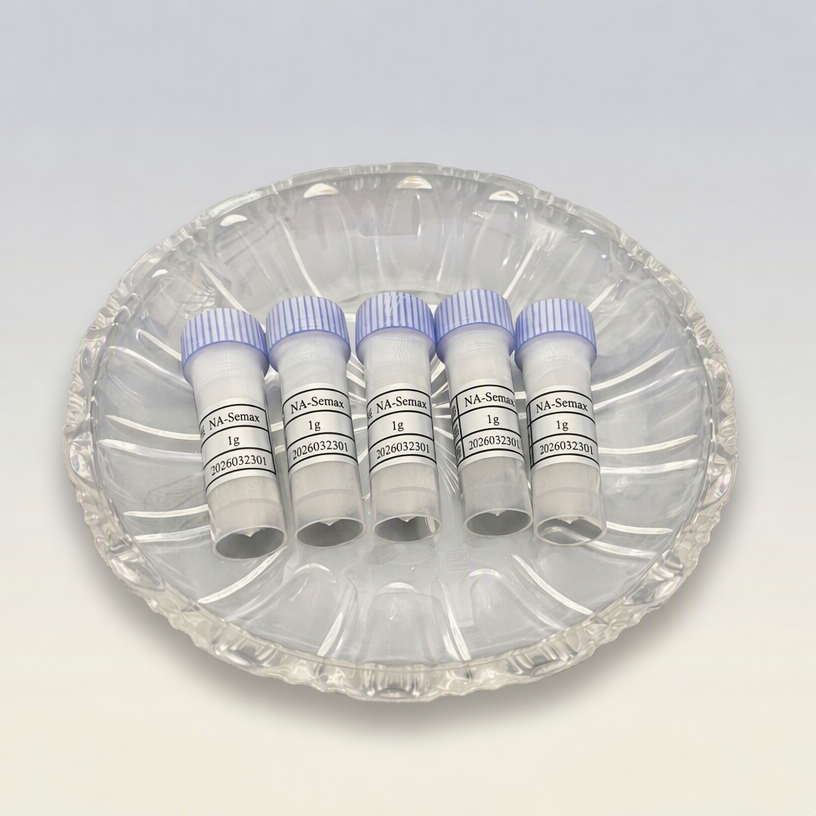
4. NA-Selank (N-Acetyl Selank) — The Next-Generation Stabilized Analog
📋 NA-Selank Quick Profile
What Is N-Terminal Acetylation?
N-terminal acetylation is one of the most common and impactful post-translational modifications in peptide chemistry. The process involves capping the free α-amino group at the N-terminus of a peptide with an acetyl group (CH₃CO-). This seemingly minor modification has profound effects on peptide behavior:
+ Acetyl group (CH₃CO-) →
NA-Selank: CH₃CO-Thr-Lys-Pro-Arg-Pro-Gly-Pro (capped N-terminus)
→ Aminopeptidase resistance ✓ | Enhanced stability ✓ | Improved membrane interaction ✓
Why N-Acetylation Matters for Selank
The primary site of enzymatic attack on Selank is the N-terminal threonine residue, which is vulnerable to aminopeptidases — enzymes that cleave peptides from the N-terminus. By capping this terminus with an acetyl group, NA-Selank gains several advantages:
- Enhanced enzymatic stability: The acetyl group prevents aminopeptidase recognition and cleavage, significantly extending the peptide's functional duration in biological matrices
- Improved membrane association: N-acetylation increases hydrophobicity, reducing electrostatic repulsion at membrane surfaces and potentially supporting more efficient transport across lipid-rich environments
- Refined conformation: The acetyl cap subtly constrains the N-terminal conformation, producing a more defined molecular structure that may improve predictability in research settings
- Potentially reduced dosing frequency: Due to extended stability, NA-Selank may achieve equivalent pharmacological effects at lower doses, potentially shifting the dose-response curve leftward
Pharmacodynamic Profile: Expected Equivalence to Selank
Because N-acetylation is primarily a pharmacokinetic modification rather than a pharmacodynamic one, NA-Selank is expected to share the same mechanism of action as parent Selank:
- Allosteric modulation of GABA-A receptors (same active pharmacophore)
- BDNF upregulation in hippocampal and cortical tissue
- Enkephalinase inhibition (IC₅₀ ~15–20 µM)
- Serotonergic and dopaminergic modulation
- Immunomodulatory activity via tuftsin-derived sequence
NA-Selank vs. NA-Selank Amidate
Some suppliers offer N-Acetyl Selank Amidate (Ac-Thr-Lys-Pro-Arg-Pro-Gly-Pro-NH₂), which adds C-terminal amidation in addition to N-terminal acetylation. This dual modification protects against both aminopeptidases (N-terminal) and carboxypeptidases (C-terminal), potentially offering the highest metabolic stability in the Selank family. However, like NA-Selank, this variant has no independent published research.
5. Structural Evolution & Design Rationale
The progression from Tuftsin → Selank → NA-Selank represents a masterclass in rational peptide stabilization. Each modification addresses a specific enzymatic vulnerability while preserving (or enhancing) the biological activity of the parent molecule.
The Enzymatic Vulnerability Map
↑ Aminopeptidase target ↑ Carboxypeptidase target
↓ Half-life: seconds
Selank: H₂N-[Thr]-Lys-Pro-Arg-Pro-Gly-Pro-COOH
↑ Still vulnerable ✓ Protected by Pro-Gly-Pro
↓ Half-life: minutes (C-terminal protected)
NA-Selank: CH₃CO-[Thr]-Lys-Pro-Arg-Pro-Gly-Pro-COOH
✓ Protected by acetyl ✓ Protected by Pro-Gly-Pro
↓ Half-life: estimated 3–10× longer than Selank
NA-Selank Amidate: CH₃CO-[Thr]-Lys-Pro-Arg-Pro-Gly-Pro-NH₂
✓ N-terminal protected ✓ C-terminal amidated
↓ Maximum dual-end protection
This stepwise protection strategy — C-terminal extension first (Selank), then N-terminal capping (NA-Selank), then dual-end protection (NA-Selank Amidate) — illustrates how peptide chemists systematically address each metabolic vulnerability without altering the core pharmacophore (Thr-Lys-Pro-Arg).
6. Mechanism of Action Comparison
While all three compounds share the tuftsin core sequence (Thr-Lys-Pro-Arg), their mechanisms of action diverge significantly based on structural modifications that affect receptor engagement, CNS penetration, and downstream signaling.
| Mechanism | Tuftsin | Selank | NA-Selank |
|---|---|---|---|
| GABA-A Modulation | ✗ Not documented | ✓ Indirect allosteric; 45/84 genes altered in frontal cortex | ✓ Expected (same pharmacophore) |
| BDNF Upregulation | ✗ Not documented | ✓ Hippocampal BDNF mRNA ↑ at 3h; protein ↑ at 24h | ✓ Expected equivalent |
| Enkephalinase Inhibition | ✗ Not active (tetrapeptide too small) | ✓ IC₅₀ ~15–20 µM (more potent than bacitracin) | ✓ Expected equivalent |
| Phagocytosis Activation | ✓ Primary activity (Kd ~10 nM) | ✓ Retained (tuftsin heritage) | ✓ Expected equivalent |
| IL-6 Regulation | ✓ Macrophage IL-1 stimulation | ✓ Normalizes IL-6 (↑ when low, ↓ when high) | ✓ Expected equivalent |
| Serotonin Modulation | ✗ Not documented | ✓ Activates 5-HT metabolism in hypothalamus | ✓ Expected equivalent |
| Dopamine Modulation | ✗ Not documented | ✓ Strain-dependent DOPAC/HVA changes | ✓ Expected equivalent |
| Respiratory Burst | ✓ NADPH oxidase activation | ✓ Retained (tuftsin heritage) | ✓ Expected equivalent |
| Antiviral Activity | ✗ Not documented | ✓ Influenza A, HSV-1/2, CMV | ✓ Expected equivalent |
| CNS Penetration | ✗ Does not cross BBB | ✓ Via intranasal nose-to-brain pathway | ✓ Potentially improved |
| Anxiolytic Activity | ✗ None documented | ✓ Clinically validated (Russia) | ✓ Expected (no independent data) |
| Nootropic Activity | ✗ None documented | ✓ BDNF-mediated cognitive enhancement | ✓ Expected (no independent data) |
7. Pharmacokinetics & Stability Comparison
| Parameter | Tuftsin | Selank | NA-Selank |
|---|---|---|---|
| Molecular Weight | 500.59 Da | 751.87 Da | ~793.9 Da |
| Amino Acid Count | 4 (tetrapeptide) | 7 (heptapeptide) | 7 + acetyl group |
| N-Terminal Protection | ✗ Free (vulnerable) | ✗ Free (vulnerable) | ✓ Acetylated (protected) |
| C-Terminal Protection | ✗ Free (vulnerable) | ✓ Pro-Gly-Pro extension | ✓ Pro-Gly-Pro extension |
| Plasma Half-life | Seconds to low minutes | ~2–5 minutes | Estimated 3–10× longer than Selank |
| BBB Penetration | Negligible | Yes (intranasal nose-to-brain) | Potentially improved |
| Primary Route | IV / IP (research) | Intranasal (clinical) / IP (research) | Intranasal (research) |
| Nasal Absorption | N/A (not used intranasally) | Standard | Potentially enhanced (↑ lipophilicity) |
| Receptor-Mediated Uptake | ✓ Tuftsin receptor (Kd ~10 nM) | ✓ Retained + CNS targets | ✓ Expected equivalent |
| Storage (Lyophilized) | -20°C, 2 years | -20°C, up to 2 years | -20°C, up to 2 years |
| Storage (Reconstituted) | 2-8°C, 1 month | 2-8°C, 14–21 days (light-sensitive) | 2-8°C, 14–30 days (estimated) |
| Dosing Frequency (Research) | N/A (impractical for systemic use) | 2–3 times daily (intranasal) | Potentially 1–2 times daily |
Why Half-Life Matters for Research Design
The dramatic difference in metabolic stability across the three compounds has direct implications for experimental design:
- Tuftsin's seconds-long half-life makes it impractical for systemic studies; most tuftsin research uses high-dose bolus injections or in vitro models
- Selank's minutes-long half-life is sufficient for intranasal dosing due to the direct nose-to-brain transport pathway, which bypasses systemic first-pass degradation
- NA-Selank's projected extended half-life could enable lower doses, reduced frequency, and longer observation windows — particularly valuable for chronic stress and neuroplasticity protocols
8. Full Head-to-Head Comparison Table
| Parameter | Tuftsin | Selank | NA-Selank |
|---|---|---|---|
| CAS Number | 9063-57-4 | 129954-34-3 | N/A (research compound) |
| Sequence | Thr-Lys-Pro-Arg | Thr-Lys-Pro-Arg-Pro-Gly-Pro | Ac-Thr-Lys-Pro-Arg-Pro-Gly-Pro |
| Molecular Formula | C₂₁H₄₀N₈O₆ | C₃₃H₅₇N₁₁O₉ | C₃₅H₅₉N₁₁O₁₀ (estimated) |
| Molecular Weight | 500.59 Da | 751.87 Da | ~793.9 Da (estimated) |
| Origin | Endogenous (IgG Fc fragment) | Synthetic (tuftsin + Pro-Gly-Pro) | Synthetic (Selank + N-acetyl) |
| Discovery/Development | Najjar & Nishioka, 1970 | IMG Russian Academy, 1990s | Research community, ~2010s |
| Primary Activity | Immunomodulatory (phagocytosis) | Anxiolytic + Nootropic + Immunomodulatory | Expected same as Selank |
| CNS Activity | None (no BBB penetration) | Anxiolytic, nootropic, neuroprotective | Expected equivalent |
| Immune Activity | Primary (phagocytosis, respiratory burst) | Retained (IL-6, cytokine modulation) | Expected equivalent |
| Clinical Approval | None | Russia (2009, GAD) | None |
| Published Studies | Extensive (preclinical + early clinical) | Extensive (Russian clinical trials) | None (independent) |
| Best Research Use Case | Immune cell activation studies, phagocytosis assays | Anxiety, cognition, neuroimmune interaction studies | Extended-duration protocols requiring peptide stability |
| Purity Standard (NutraBiotech) | ≥98% (HPLC) | ≥98% (HPLC) | ≥98% (HPLC) |
9. Research Applications by Field
Each compound in the Selank family occupies a distinct niche in the research landscape. Understanding which compound to select for a given research question is critical for experimental success.
| Research Field | Recommended Compound | Rationale | Evidence Level |
|---|---|---|---|
| Anxiety / Anxiolytic Mechanisms | Selank or NA-Selank | GABA-A modulation without sedation; Russian clinical validation | Strong (clinical) |
| Cognitive Enhancement / Nootropics | Selank or NA-Selank | BDNF upregulation; memory and learning paradigms | Moderate (preclinical + early clinical) |
| Neuroimmune Interaction | Selank | Dual CNS + immune activity; 34/84 gene expression changes | Strong (preclinical) |
| Phagocytosis / Innate Immunity | Tuftsin | Primary phagocytosis activator; Kd ~10 nM receptor binding | Strong (preclinical) |
| Macrophage Activation | Tuftsin | Direct receptor-mediated activation; IL-1 stimulation | Strong (preclinical) |
| Antiviral Research | Selank | Documented activity vs. influenza A, HSV, CMV | Moderate (preclinical) |
| Stress / HPA Axis Research | Selank or NA-Selank | Corticosterone suppression; stress resilience models | Moderate (preclinical) |
| Enkephalin / Opioid System | Selank | Enkephalinase inhibition (IC₅₀ ~15–20 µM) | Moderate (in vitro) |
| Peptide Stability / PK Studies | NA-Selank | N-acetylation as stability optimization model | Early (theoretical/extrapolated) |
| Sepsis / Infection Models | Tuftsin | Tuftsin-based nanoparticles in sepsis models (2025) | Early (preclinical) |
| Benzodiazepine Alternatives | Selank | Comparable anxiolysis without sedation/dependence | Moderate (clinical, Russian) |
| Chronic Dosing Protocols | NA-Selank | Extended half-life for reduced dosing frequency | Theoretical (no independent data) |
10. Sourcing & Quality Standards for Research Peptides
When sourcing Selank family peptides for research, quality and documentation are paramount. The following criteria should guide procurement decisions:
Essential Quality Criteria
| Criterion | Standard | Why It Matters |
|---|---|---|
| Purity | ≥98% (HPLC verified) | Impurities can confound receptor binding assays and behavioral studies |
| COA (Certificate of Analysis) | Required for every batch | Confirms identity, purity, and absence of contaminants |
| MSDS | Required | Safety handling information for laboratory use |
| Mass Spectrometry | Required (molecular weight confirmation) | Verifies correct peptide sequence and modification (e.g., acetylation) |
| Synthesis Method | Solid-Phase Peptide Synthesis (SPPS) | Ensures batch-to-batch consistency and correct stereochemistry |
| Physical Form | Lyophilized powder | Maximum stability during shipping and storage |
| Storage Conditions | -20°C (lyophilized); 2–8°C (reconstituted) | Peptides are temperature-sensitive; improper storage degrades activity |
| Packaging | Vacuum-sealed, light-protected | Selank is light-sensitive; proper packaging preserves integrity |
🚨 Red Flags When Sourcing Peptides
- Cannot provide batch-specific COA with HPLC chromatograms
- Do not offer mass spectrometry confirmation
- Sell peptides without proper cold-chain shipping for temperature-sensitive compounds
- Claim NA-Selank has "clinical validation" or is "FDA-approved" (it is neither)
- Cannot specify whether their "NA-Selank" includes C-terminal amidation or not
- Lack transparent information about synthesis method and purification
- Do not provide MSDS documentation
11. Frequently Asked Questions
What is the difference between Selank and Tuftsin?
Tuftsin (Thr-Lys-Pro-Arg) is a naturally occurring endogenous tetrapeptide derived from the Fc region of immunoglobulin G, primarily acting as an immunomodulator that activates phagocytic cells. Selank (Thr-Lys-Pro-Arg-Pro-Gly-Pro) is a synthetic heptapeptide that extends tuftsin's sequence with a Pro-Gly-Pro tripeptide, dramatically improving metabolic stability (from seconds to minutes) and adding anxiolytic and nootropic CNS activities not present in the parent molecule. Critically, tuftsin does not cross the blood-brain barrier, while Selank reaches CNS targets via intranasal nose-to-brain transport.
What is N-Acetyl Selank (NA-Selank) and how does it differ from Selank?
NA-Selank is the N-terminally acetylated derivative of Selank. The acetyl group caps the free N-terminus, protecting it from aminopeptidase degradation and potentially extending the peptide's half-life by an estimated 3–10× compared to unmodified Selank. While its pharmacodynamic profile is expected to be identical to Selank (same active pharmacophore), NA-Selank has no independent published clinical or preclinical studies — all claims are extrapolated from the parent compound.
Is Selank approved by the FDA?
No. Selank is not FDA-approved. It is registered as a prescription anxiolytic drug in Russia (approved 2009) under the brand name Selanc for generalized anxiety disorder (GAD). NA-Selank and Tuftsin are not approved by any regulatory authority worldwide. All three compounds are available as research chemicals only and should be used exclusively in laboratory research settings.
What is the mechanism of action of Selank?
Selank exerts its effects through multiple converging mechanisms: (1) indirect allosteric modulation of GABA-A receptors, enhancing sensitivity to endogenous GABA without direct benzodiazepine-site binding; (2) upregulation of BDNF expression in the hippocampus and cortex; (3) dose-dependent inhibition of enkephalinase (IC₅₀ ~15–20 µM), extending endogenous enkephalin half-life; (4) modulation of serotonin and dopamine metabolism in anxiety-relevant brain regions; and (5) immunomodulatory activity inherited from its tuftsin parent, including IL-6 regulation and cytokine balance modulation.
Why does Tuftsin have such a short half-life?
Tuftsin's tetrapeptide sequence (Thr-Lys-Pro-Arg) is highly susceptible to degradation by aminopeptidases (which cleave the N-terminal Thr) and carboxypeptidases (which attack the C-terminal Arg) present in blood plasma. Its estimated plasma half-life is in the range of seconds to low single-digit minutes. The Pro-Gly-Pro C-terminal extension in Selank and the N-acetyl modification in NA-Selank are both strategies designed to overcome these specific enzymatic vulnerabilities.
How is Selank administered in research?
The primary route of administration for Selank is intranasal, which exploits the direct nose-to-brain transport pathway via the olfactory epithelium. This bypasses systemic first-pass metabolism and the blood-brain barrier. In research settings, intraperitoneal (IP) injection is also used for rodent studies. Typical research doses range from 0.1–1 mg/kg in animal models. Russian clinical use employs 0.15% nasal drops (approximately 300–2,700 µg/day).
Can Selank be used with benzodiazepines in research?
Russian clinical research has explored co-administration of Selank with benzodiazepines. Published data (Medvedev et al.) suggests Selank may reduce benzodiazepine-related side effects while maintaining anxiolytic efficacy. However, such combination protocols should only be investigated under properly controlled research conditions with appropriate ethical approvals and institutional oversight.
Which compound should I choose for my research: Selank or NA-Selank?
Choose Selank if your research requires comparison to published literature, as the vast majority of studies use unmodified Selank. Choose NA-Selank if your protocol involves extended observation windows, chronic dosing, or if metabolic stability is a limiting factor. For immunology-focused research without CNS requirements, Tuftsin remains the most direct tool for studying phagocytosis and macrophage activation.
What is the relationship between Selank and Semax?
Selank and Semax are both synthetic heptapeptides developed at the Institute of Molecular Genetics (IMG) in Moscow, both ending in Pro-Gly-Pro, and both administered intranasally. However, they have completely different parent molecules and mechanisms: Selank is derived from tuftsin (an immunopeptide) and primarily modulates GABA-A receptors for anxiolytic effects. Semax is derived from ACTH(4-10) (a hormone fragment) and primarily upregulates BDNF and enhances dopaminergic activity for cognitive enhancement. They are complementary, not interchangeable.
How should Selank family peptides be stored?
Lyophilized peptides should be stored at -20°C for up to 2 years (or 2–8°C for up to 6 months). Reconstituted peptides should be kept at 2–8°C and used within 14–21 days. All Selank family peptides are light-sensitive and should be protected from direct light. Avoid repeated freeze-thaw cycles. Reconstitute with bacteriostatic water (1–2 mL per vial), swirling gently against the vial wall.
12. Conclusion & Key Takeaways
The Selank family — spanning Tuftsin, Selank, and NA-Selank — illustrates how rational peptide engineering can transform a short-lived endogenous immune peptide into a clinically validated CNS-active drug and, subsequently, into a next-generation research compound with optimized pharmacokinetics.
| Compound | Greatest Strength | Best Research Application |
|---|---|---|
| Tuftsin | Endogenous authenticity; direct phagocyte receptor binding | Innate immunity, phagocytosis, macrophage activation studies |
| Selank | Clinically validated anxiolytic without sedation/dependence | Anxiety, cognition, neuroimmune interaction, BDNF research |
| NA-Selank | Enhanced metabolic stability via N-terminal protection | Extended-duration protocols; stability-optimized PK studies |
Final Summary
- Tuftsin (CAS 9063-57-4) is the endogenous starting point — a potent immunomodulator with a half-life too short for practical systemic therapeutic use and no CNS activity
- Selank (CAS 129954-34-3) is the clinically validated evolution — a Russian-approved anxiolytic with dual neuroimmune activity, GABA-A modulation, BDNF upregulation, and no benzodiazepine-like side effects
- NA-Selank is the pharmacokinetically optimized next generation — offering theoretical stability advantages through N-terminal acetylation, but lacking independent clinical validation
- All three share the tuftsin pharmacophore (Thr-Lys-Pro-Arg) but differ fundamentally in metabolic stability, CNS penetration, and breadth of biological activity
- For research procurement, prioritize suppliers providing ≥98% HPLC-verified purity, batch-specific COA, mass spectrometry confirmation, and proper cold-chain logistics
Tuftsin = Immune activator (seconds, no CNS) → Selank = Anxiolytic + Nootropic (minutes, CNS-active) → NA-Selank = Stability-optimized Selank (extended, CNS-active, theoretical)
Need High-Purity Selank Family Research Peptides?
NutraBiotech provides research-grade Selank (CAS 129954-34-3), NA-Selank, and Tuftsin (CAS 9063-57-4) with complete COA documentation, HPLC purity verification (≥98%), mass spectrometry confirmation, and GMP-certified manufacturing. Available in 5mg, 10mg, 50mg, 100mg, and bulk quantities with global cold-chain shipping.
Request a Quote →