
1. Introduction: The Metabolic Disease Crisis and Mitochondrial Uncouplers
Obesity and its metabolic comorbidities — type 2 diabetes, non-alcoholic steatohepatitis (NASH), cardiovascular disease, and fatty liver — have become the defining public-health crisis of the 21st century. Worldwide, more than 800 million adults live with obesity, and conventional approaches (caloric restriction, bariatric surgery, and a growing class of incretin-based therapeutics) each carry limitations in durability, accessibility, or tolerability. For decades, researchers have eyed a fundamentally different lever: the mitochondrion's own energy-dissipating machinery.
Mitochondrial uncoupling — deliberately allowing the cell's "power plant" to burn fuel as heat rather than storing it as ATP — is one of biology's most elegant metabolic control knobs. The body already uses it: brown adipose tissue (BAT) uncouples respiration via the UCP1 protein to generate heat in newborns and cold-adapted adults. The challenge has been finding small-molecule uncouplers that mimic this effect safely and reversibly, without the deadly hyperthermia that doomed earlier agents such as 2,4-dinitrophenol (DNP).
In 2023, a team led by researchers at the University of Virginia and the University of New South Wales published a landmark paper in the Journal of Medicinal Chemistry describing a new series of oxadiazolopyridine mitochondrial uncouplers. Among them, one compound stood out: SHM115. Derived from the well-known BAM15 chemotype but engineered for superior tissue distribution, SHM115 combined a gentle ("mild") uncoupling profile with high oral bioavailability and, crucially, strong exposure in both white and brown adipose tissue.
SHM115 reduced fat-mass gain by 59% in an obesity-prevention model and reversed ~20% of existing body fat in an obesity-reversal model — without reducing food intake, lean mass, or core body temperature. It also restored fasting glucose and insulin toward healthy levels in obese animals. This was not a toxic, thermogenesis-driven effect; it was a clean, energy-expenditure-driven metabolic improvement. Today, SHM115 stands as one of the most promising preclinical mitochondrial uncouplers for metabolic disease research. As a flagship research product of NutraBiotech, pharmaceutical-grade SHM115 is now accessible to researchers and formulators at prices that make this molecule viable for large-scale study.
⚡ Key Insight
SHM115 represents the "mild uncoupler" generation of metabolic therapeutics. First era: harsh, toxic uncouplers (DNP, withdrawn). Second era: mitochondria-selective probes (BAM15, FCCP). Third era: tissue-targeted, orally bioavailable mild uncouplers (SHM115, 2023–present) — engineered for adipose and liver exposure with a safe physiological window.
2. What Is SHM115? Chemistry, Structure & Discovery
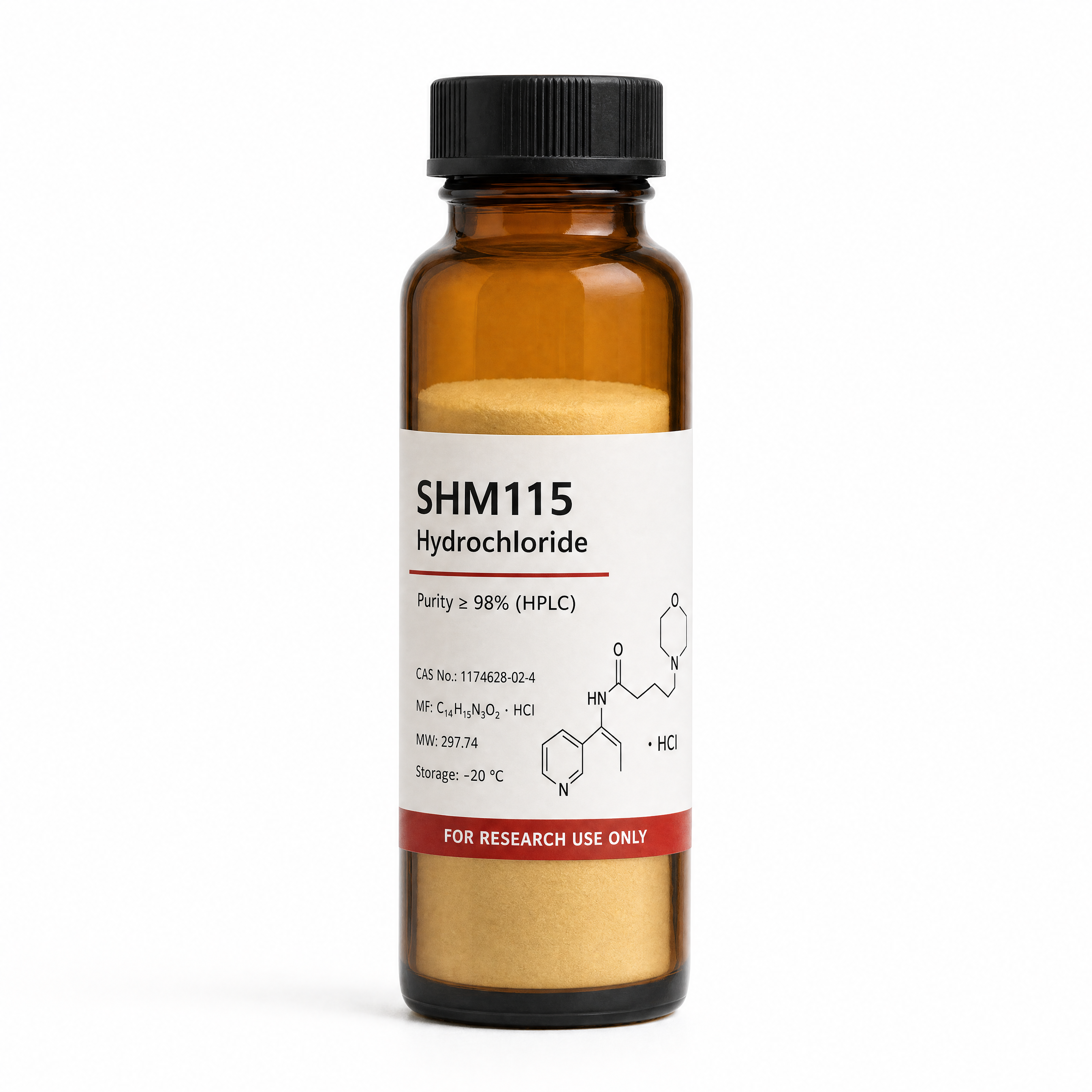
SHM115 is a small-molecule mitochondrial uncoupler belonging to the oxadiazolopyridine chemical class. It is the pentafluoroaniline-decorated derivative identified through structure–activity relationship (SAR) optimization of the BAM15 chemotype. SHM115 acts as a mild protonophore: it dissipates the proton gradient across the inner mitochondrial membrane to increase proton leak, stimulate the electron transport chain, raise the oxygen consumption rate (OCR), and increase whole-body energy expenditure. First characterized as an anti-obesity uncoupler in 2023 (Hargett et al., J. Med. Chem.), SHM115 has rapidly become a focus of metabolic-disease research for its unique combination of oral bioavailability (75%) and adipose-tissue exposure.
3. The Science of Mitochondrial Uncoupling
To understand why SHM115 matters, it helps to understand how a mitochondrion normally turns food into usable energy — and what happens when that process is deliberately "uncoupled."
In healthy cells, nutrients are oxidized by the electron transport chain (ETC) in the inner mitochondrial membrane. The ETC pumps protons (H+) from the matrix into the intermembrane space, building up an electrochemical proton-motive force — a kind of charged dam. Normally, protons flow back through ATP synthase, and that flow drives the synthesis of ATP, the cell's energy currency. This is coupled respiration: fuel in, ATP out.
A mitochondrial uncoupler is a molecule that punches a "leak" in that dam. Uncouplers are weak acids that shuttle protons across the membrane independently of ATP synthase. The proton gradient collapses, the ETC is no longer "backed up," and it spins faster and faster to try to rebuild the gradient — burning fuel and consuming oxygen at a high rate, but producing heat instead of ATP. This is uncoupled respiration.
The therapeutic opportunity is enormous: if you can induce a controlled, mild proton leak, the body must increase energy expenditure to compensate — pulling stored fat to fuel the now-inefficient mitochondria. The danger, historically, is that too much uncoupling abolishes ATP production entirely and triggers lethal hyperthermia. The entire modern design effort around compounds like BAM15 and SHM115 is to stay in the "mild uncoupler" sweet spot: enough leak to drive fat loss, not enough to cook the cell.
Coupled: Food → ETC → proton gradient → ATP (stored energy). | Uncoupled: Food → ETC → proton leak → heat + oxygen consumption (spent energy). SHM115 gently shifts the balance toward the latter, raising energy expenditure without spiking body temperature.
4. How SHM115 Works: Proton Leak & Energy Expenditure
SHM115 is a lipophilic weak acid that partitions into the inner mitochondrial membrane and acts as a protonophore. Its mechanism can be broken into four linked steps:
What makes SHM115 special is where it acts. Pharmacokinetic studies showed primary localization in the liver, followed by both white adipose tissue (WAT) and brown adipose tissue (BAT), with lesser amounts in kidney, heart, skeletal muscle, and brain. Compared with the parent BAM15 scaffold (which showed minimal adipose exposure), SHM115 achieved roughly a 3-fold increase in white adipose exposure and a 1.5-fold increase in brown adipose exposure — the very tissues whose energy expenditure matters most for reversing obesity.
In the obesity-reversal study, SHM115 lowered body fat without raising core body temperature — a direct contrast to harsh uncouplers that cause dangerous, heat-driven weight loss. This temperature-neutral fat loss is the pharmacological signature of a well-behaved mild uncoupler and the reason SHM115 is a credible preclinical candidate rather than a hazardous agent.
5. SHM115 vs Other Uncouplers: Head-to-Head Comparison
SHM115 does not exist in a vacuum. It belongs to a lineage of mitochondrial uncouplers, each with a different safety and distribution profile. The table and comparison cards below place SHM115 alongside the most relevant reference compounds.
| Compound | Class | Uncoupling Potency | Oral Bioavailability | Adipose Exposure | Safety Window |
|---|---|---|---|---|---|
| SHM115 | Oxadiazolopyridine | Mild (EC50 ~17 μM) | ~75% | High (WAT ~3×, BAT ~1.5×) | Broad — temp-neutral fat loss |
| BAM15 | Benzoxazolone | Mild (low μM) | High | Low | Broad — mitochondria-selective |
| DNP (2,4-DNP) | Phenol | Very high | High | Systemic | Narrow — hyperthermia risk |
| FCCP | Fluorocarbon | Extreme (research tool) | Poor (injectable) | Research only | Very narrow — toxic |
SHM115
BAM15
DNP
FCCP
SHM115 inherits BAM15's gentle uncoupling safety profile but fixes its biggest weakness — poor adipose distribution. The N→C scaffold edit plus the pentafluoroaniline substituent raised lipophilicity enough to drive meaningful white- and brown-adipose exposure, which is precisely why SHM115 succeeded in obesity models where BAM15 did not.
6. Preclinical Evidence: Key SHM115 Studies (2023)
This SAR study established 5-hydroxyoxadiazolopyridines as mild mitochondrial uncouplers and identified SHM115 (pentafluoroaniline substituent) as the lead candidate. Key findings:
- SHM115 showed an uncoupling EC50 of 17 μM (OCR increase in L6 rat myoblasts).
- SHM115 exhibited ~75% oral bioavailability — suitable for once-daily oral dosing.
- Tissue distribution favored the liver, then white and brown adipose tissue.
- Adipose exposure was dramatically higher than the BAM15 parent (WAT ~3×, BAT ~1.5×).
Mice fed a Western-type (obesogenic) diet with SHM115 admixed at 130 mg/kg/day showed:
- 59% reduction in fat-mass gain versus untreated controls.
- No change in food consumption — fat loss was not due to appetite suppression.
- Effective prevention of diet-induced weight and fat accumulation.
Mice made obese on a Western diet for 19 weeks were then given SHM115 by oral gavage at 130 mg/kg/day for 3 weeks:
- ~20% loss of body fat without altering food intake.
- No change in fat-free (lean) mass or core body temperature.
- Gonadal white adipose tissue significantly reduced; fecal triglyceride/FFA unchanged (not malabsorption).
- Restored fasting serum glucose and insulin toward healthy levels.
These are preclinical (mouse) data. They demonstrate that SHM115 can prevent and reverse diet-induced obesity and improve glucose/insulin homeostasis in rodents, with a favorable tolerability profile at 130 mg/kg/day. They do not establish human efficacy or safety — SHM115 has not entered human trials. The data are the foundation for its research value, not a clinical claim.
7. Pharmacokinetics & Tissue Distribution
SHM115's preclinical appeal rests heavily on its pharmacokinetic (PK) profile — specifically, that it is both well-absorbed orally and distributed to the right tissues.
Oral Absorption
High oral bioavailability enables simple once-daily oral administration (chow or gavage) in research models — no injection required.
Liver (Primary)
SHM115 localizes first in the liver, supporting hepatic fat oxidation and the glucose/insulin improvements seen in obese models.
White Adipose (WAT)
Strong white-fat exposure drives energy expenditure in the body's largest calorie-storage depot — key to its obesity efficacy.
Brown Adipose (BAT)
Brown-fat exposure supports thermogenic energy expenditure pathways, complementing white-fat effects.
Lesser amounts of SHM115 were detected in kidney, heart, skeletal muscle, and brain. This distribution pattern — concentrated in liver and adipose, the metabolically relevant tissues — is exactly what distinguishes SHM115 from the BAM15 parent and underlies its efficacy in models where BAM15 showed no anti-obesity effect.
8. Metabolic & Health Benefits of SHM115
Based on the preclinical literature, SHM115's benefits cluster around energy expenditure and metabolic homeostasis. The benefit cards below summarize the mechanistic and observed effects reported in the 2023 study.
🔥 Increased Energy Expenditure
By raising proton leak, SHM115 stimulates the ETC and increases the oxygen consumption rate, pushing the body to burn more fuel continuously.
🥦 Reduced Fat Mass
59% less fat-mass gain in prevention and ~20% reversal of existing fat in obese models — without reducing food intake or lean mass.
🩷 Improved Glucose Homeostasis
Restored fasting serum glucose and insulin levels in diet-induced obese mice, pointing to better systemic metabolic control.
🧬 Liver-Targeted Action
Primary localization in the liver supports hepatic fat oxidation — relevant to fatty-liver and NASH research directions.
🏃 Temperature-Neutral
Fat loss occurred without raising core body temperature — the hallmark of a safe "mild" uncoupler rather than a toxic one.
💌 Oral & Convenient
~75% oral bioavailability means effective once-daily oral dosing in research models, simplifying study design.
9. Safety Profile, Precautions & Important Considerations
SHM115's "mild uncoupler" design is precisely what gives it a smoother preclinical safety profile than historical uncouplers. In the 2023 obesity studies, daily oral SHM115 (130 mg/kg/day) was well-tolerated:
- No reduction in food intake — effects are driven by energy expenditure, not appetite suppression.
- No loss of lean (fat-free) mass — fat-specific loss preserves metabolically active tissue.
- No increase in core body temperature — distinguishes it from dangerous thermogenic uncouplers.
- Restored — not disrupted — fasting glucose and insulin in obese animals.
SHM115 is a research chemical at the preclinical stage. It has not been evaluated in humans and has no established human safety data. As a mitochondrial uncoupler it can increase cellular energy expenditure and must be handled only by qualified personnel in controlled laboratory settings. SHM115 is not for human or veterinary consumption, and any therapeutic translation remains speculative pending clinical investigation.
SHM115 is supplied for laboratory and research use only. It is not a drug, food, or dietary supplement. Purchase, possession, and use may be subject to local regulations. Always follow institutional biosafety and chemical-hygiene protocols, and consult a qualified professional before any experimental use.
10. Recommended Research Dosage & Usage Guidelines
All dosing information below refers strictly to preclinical (animal) research as reported in the published literature. It is provided for scientific context and is not a recommendation for human use.
For formulation, SHM115 is supplied as a white to beige powder soluble in DMSO at 2 mg/mL to give a clear solution. Researchers typically prepare fresh stock solutions or aliquoted DMSO stocks stored at -20°C. Always confirm concentration and purity via the batch Certificate of Analysis before use, and scale doses according to your institution's approved animal protocols.
11. SHM115 Stability & Storage: A Critical Factor
Like many fluorinated small-molecule research chemicals, SHM115 is stable as a solid but requires proper storage to preserve integrity over time.
1. Store powder at 2–8°C (refrigerated) in a tightly sealed container. 2. Protect from moisture and light. 3. For liquid stocks, prepare in DMSO (2 mg/mL, clear) and store aliquoted at -20°C if long-term holding is needed. 4. Always purchase from suppliers providing a batch-specific COA confirming identity (NMR/MS) and HPLC purity (≥98%).
NutraBiotech ships SHM115 with temperature-appropriate packaging and desiccant protection to preserve the compound from the warehouse to your bench. Proper cold-chain handling is essential: degradation reduces both purity and biological activity, which can confound experimental results.
12. Why Choose SHM115 from NutraBiotech? Quality & Price Advantage
As a direct manufacturer and supplier of research chemicals, NutraBiotech removes the middleman between synthesis and your laboratory. For SHM115, that means three concrete advantages:
Verified Purity (≥98%)
Every batch is HPLC-tested, with NMR and mass-spectrometry structural confirmation and heavy-metals / residual-solvents testing.
Full Documentation
Batch-specific Certificate of Analysis (COA), Certificate of Origin, and structural data shipped with every order.
Cold-Chain Shipping
Temperature-appropriate logistics with desiccant packaging preserve SHM115 stability from our lab to yours, worldwide.
Best Market Price
Vertical integration and wholesale volume discounts deliver pharmaceutical-grade SHM115 at the lowest industry price.
💰 NutraBiotech SHM115 — Unbeatable Value
- ✓ Batch-specific COA
- ✓ NMR & MS confirmation
- ✓ Cold-chain worldwide shipping
- ✓ Wholesale volume discounts
- ✓ Direct manufacturer pricing
13. How to Purchase Pharmaceutical-Grade SHM115
Ordering SHM115 from NutraBiotech is straightforward, whether you need milligrams for assay development or kilograms for large-scale research programs. Our team supports researchers, formulators, and procurement departments with fast quotes, flexible quantities, and reliable logistics.
🚀 Source SHM115 from NutraBiotech
Whether you're advancing mitochondrial-uncoupling research, building obesity or NASH models, or screening next-generation metabolic compounds — NutraBiotech's pharmaceutical-grade SHM115 delivers unmatched purity, verified documentation, and the best price in the industry. Contact us today for a personalized quote and discover why leading research labs choose NutraBiotech as their trusted SHM115 partner.
Request SHM115 Quote →14. Future of SHM115: Clinical Translation & Therapeutic Horizons
SHM115 sits at an exciting inflection point. As a preclinical-stage compound originating from the University of Virginia and the University of New South Wales, its trajectory mirrors that of other targeted metabolic agents moving toward translational studies. Potential research and therapeutic horizons include:
- Obesity & overweight — the lead indication, supported by both prevention and reversal models.
- NASH / fatty liver disease — liver-preferential distribution makes hepatic fat oxidation a natural extension.
- Type 2 diabetes & insulin resistance — fasting glucose and insulin restoration in obese models points to glycemic applications.
- Combination metabolic strategies — uncouplers may complement other pathways (e.g., incretin or AMPK-directed agents) for synergistic effect.
As of 2026, SHM115 remains at the preclinical stage. No human clinical trials have been initiated. Continued research — PK/PD, toxicology, and mechanism studies — will determine whether and how SHM115 advances toward clinical translation. NutraBiotech supports this pipeline by supplying reproducible, high-purity material to qualified research groups.
15. Frequently Asked Questions
SHM115 (CAS 2918770-46-2) is a small-molecule mitochondrial uncoupler of the oxadiazolopyridine class, derived from the parent scaffold BAM15. It acts as a mild protonophore: it dissipates the proton gradient across the inner mitochondrial membrane, creating a controlled "proton leak" that stimulates the electron transport chain, increases the oxygen consumption rate (OCR), and raises whole-body energy expenditure. In preclinical diet-induced obesity models, daily oral administration (130 mg/kg/day) reduced fat-mass gain by 59% in a prevention model and reversed ~20% of existing body fat in a reversal model — without reducing food intake, lean mass, or core body temperature. SHM115 was first described in a 2023 Journal of Medicinal Chemistry paper by researchers at the University of Virginia and the University of New South Wales.
No. SHM115 and BAM15 are chemically distinct but structurally related mitochondrial uncouplers. BAM15 is the earlier, mitochondria-selective benzoxazolone-derived uncoupler that established the therapeutic potential of mild small-molecule uncouplers. SHM115 is a next-generation oxadiazolopyridine derivative designed through structure-activity relationship (SAR) optimization of the BAM15 chemotype. The key molecular edit — replacing an oxadiazolopyrazine nitrogen with a carbon (N to C change) and decorating the aniline ring with a pentafluoro substituent — increased lipophilicity and, critically, boosted exposure in both white and brown adipose tissue. SHM115 retains high oral bioavailability (75%) while gaining the adipose-tissue distribution that BAM15 lacks, which underlies its efficacy in obesity models where BAM15 showed no effect.
SHM115 has an uncoupling EC50 of approximately 17 μM, measured as the increase in oxygen consumption rate (OCR) in L6 rat myoblast cells. This places SHM115 in the "mild uncoupler" category — potent enough to drive meaningful energy expenditure and fat loss, yet gentle enough to avoid the dangerous hyperthermia and toxicity associated with classical, harsh uncouplers such as 2,4-dinitrophenol (DNP). The "mild uncoupler" profile is precisely what makes SHM115 an attractive preclinical candidate for metabolic disease rather than a hazardous agent.
No. As of 2026, SHM115 is at the preclinical stage of research and has not entered human clinical trials. All efficacy and safety data come from in vitro assays and diet-induced obesity mouse models (both prevention and reversal). The compound's research status is listed as "preclinical" by drug intelligence databases, with the originating institutions being the University of Virginia and the University of New South Wales. SHM115 is supplied strictly for laboratory and research use and is not approved for human consumption, diagnosis, treatment, or prevention of any disease.
SHM115 exhibits approximately 75% oral bioavailability, a key advantage that enables effective once-daily oral dosing in preclinical models (130 mg/kg/day via chow or oral gavage). High oral bioavailability is what makes SHM115 a practical research tool and a credible preclinical candidate, distinguishing it from many mitochondrial probes that require injection. The compound is supplied as a white to beige powder soluble in DMSO (2 mg/mL, clear solution).
SHM115 should be stored as a powder at 2–8°C (refrigerated) in a tightly sealed container protected from moisture and light. The compound is supplied as a stable solid (white to beige powder) and is soluble in DMSO at 2 mg/mL to form a clear solution. For research use, prepare stock solutions fresh or store aliquoted DMSO stocks at -20°C if long-term liquid storage is required. Always purchase from suppliers who provide a batch-specific Certificate of Analysis (COA) confirming identity (NMR/MS) and HPLC purity (≥98%).
In preclinical obesity models, SHM115 was well-tolerated at 130 mg/kg/day with no reduction in food intake, lean mass, or core body temperature, and it restored fasting glucose and insulin levels. However, SHM115 is a research chemical at the preclinical stage with no human safety data. As a mitochondrial uncoupler it can increase energy expenditure and should be handled only by qualified personnel in controlled laboratory settings. It is not for human or veterinary consumption. The absence of human clinical data means its full safety profile in humans is unknown, and any therapeutic translation remains speculative pending clinical investigation.
NutraBiotech offers pharmaceutical-grade SHM115 (CAS 2918770-46-2) at industry-leading competitive prices. As a direct manufacturer and supplier, NutraBiotech provides HPLC-verified purity (≥98%), full Certificate of Analysis (COA) with batch-specific data, NMR and mass-spectrometry structural confirmation, heavy-metals and residual-solvents testing, temperature-appropriate packaging, bulk wholesale pricing with volume discounts, and worldwide shipping with proper cold-chain logistics. NutraBiotech's vertical integration eliminates middlemen, ensuring researchers and formulators get the highest-quality SHM115 at the lowest market price. Visit nutrabiotechchem.com to request a quote or place an order.
Classic uncouplers such as 2,4-dinitrophenol (DNP) and the research tool FCCP are extremely potent protonophores that uncouple respiration so aggressively they cause dangerous, sometimes fatal hyperthermia, profuse sweating, and tissue damage — which is why DNP was withdrawn from the clinic. SHM115 is a deliberately "mild" uncoupler (EC50 ~17 μM), engineered to increase energy expenditure within a safe physiological window. In animal studies it lowered body fat without raising core body temperature, a critical safety distinction. SHM115 also combines high oral bioavailability (75%) with selective adipose-tissue exposure that harsh uncouplers do not offer, making it a credible preclinical metabolic-disease candidate rather than a hazardous agent.
16. Conclusion & Key Takeaways
SHM115 (CAS 2918770-46-2) represents a new generation of mild, orally bioavailable, tissue-targeted mitochondrial uncouplers — engineered to capture the metabolic benefits of uncoupling while avoiding the toxicity that ended the era of harsh agents like DNP. Its preclinical record is compelling:
| # | Key Takeaway |
|---|---|
| 1 | SHM115 is a mild mitochondrial uncoupler (oxadiazolopyridine class, derived from BAM15) with an EC50 of ~17 μM in OCR assays. |
| 2 | 75% oral bioavailability enables simple once-daily oral dosing in research models. |
| 3 | Reduces fat-mass gain by 59% in prevention models and reverses ~20% body fat in reversal models — without cutting food intake. |
| 4 | Targets liver, white & brown adipose — the metabolically relevant tissues — unlike the BAM15 parent. |
| 5 | Temperature-neutral fat loss and restored fasting glucose/insulin mark a safe uncoupler profile. |
| 6 | Preclinical-only status — no human data; supplied for research use with proper storage (2–8°C). |
| 7 | NutraBiotech delivers ≥98% HPLC SHM115 at competitive prices with full COA documentation and cold-chain shipping. |
🚀 Advance Your Metabolic Research with NutraBiotech SHM115
Whether you're building obesity and NASH models, screening mitochondrial-uncoupling mechanisms, or formulating next-generation metabolic research programs — NutraBiotech's pharmaceutical-grade SHM115 delivers unmatched purity, verified documentation, and the best price in the industry. Contact us today for a personalized quote and discover why leading research labs choose NutraBiotech as their trusted SHM115 partner.
Get Your SHM115 Quote Now →This article is for informational and educational purposes only and does not constitute medical advice, diagnosis, or treatment recommendations. SHM115 is a research chemical that has not been evaluated by the FDA, EMA, or any other regulatory authority for the diagnosis, treatment, cure, or prevention of any disease. SHM115 has not completed human clinical safety or efficacy trials. All safety and efficacy data referenced in this article is derived from preclinical (in vitro and animal) studies unless otherwise noted. The dosing information provided is based on published animal studies and must not be interpreted as established clinical dosing guidelines. SHM115 is supplied strictly for laboratory and research use and is not for human or veterinary consumption. Always consult with a qualified professional and follow institutional protocols before any experimental use. NutraBiotech supplies SHM115 for research and laboratory purposes only. Statements regarding biological activity have not been evaluated by regulatory authorities.
References
- Hargett SR, Murray JH, Hoehn KL, Salamoun JM, Li C, Santos WL, et al. Oxadiazolopyridine Derivatives as Efficacious Mitochondrial Uncouplers in the Prevention of Diet-Induced Obesity. Journal of Medicinal Chemistry. 2023;66(7):4922-4937. doi:10.1021/acs.jmedchem.2c01989
- Sigma-Aldrich. SHM115 (≥98% HPLC, SML3876). Product SML3876
- Zhihuiya Drug Intelligence. SHM-115 (preclinical, obesity; Univ. of Virginia & UNSW). Drug profile
- Murray HJ, Hoehn KL, Santos WL, et al. Mitochondria-selective mild uncouplers (BAM15 lineage) as metabolic-disease therapeutics — review of the chemotype. Related literature, BAM15 primary reports.
- Public domain preclinical obesity-model methodology (Western-diet prevention & reversal) as described in the 2023 J. Med. Chem. SHM115 study.