EUK-134 CAS 81065-76-1
Synthetic SOD/Catalase Mimetic & Catalytic ROS Scavenger
EUK-134 is a synthetic manganese(III) salen complex engineered to reproduce the activity of two antioxidant enzymes in a single small molecule: it dismutates superoxide like superoxide dismutase (SOD) and decomposes hydrogen peroxide like catalase, while also detoxifying peroxynitrite. Because it works catalytically rather than stoichiometrically, one molecule can neutralise many reactive oxygen species without being consumed - the property that makes EUK-134 a benchmark radioprotectant and oxidative-stress tool compound in neuroprotection, mitochondrial biology, photoprotection and ischemia-reperfusion research.
Molecular Information
EUK-134 Technical Specifications & Quality Control Parameters
Complete physicochemical properties and QC release data for research-grade EUK-134 manganese salen complex (CAS 81065-76-1)
📋 Physicochemical Properties
- Product NameEUK-134
- Formal NameChloro[[2,2'-[1,2-ethanediylbis[(nitrilo-kappaN)methylidyne]]bis[6-methoxyphenolato-kappaO]]]-manganese
- INCI / Cosmetic NameEthylbisiminomethylguaiacol Manganese Chloride
- CAS Number81065-76-1
- Molecular FormulaC18H18ClMnN2O4
- Molecular Weight416.74 g/mol
- Metal ContentMn(III) centre, ~13.2% Mn (theoretical)
- SMILES[Cl-][Mn+3]12([N]3=CC4=CC=CC(OC)=C4[O-]2)N=CC5=CC=CC(OC)=C5[O-]1
- InChIKeyYUZJJFWCXJDFOQ-GAMUHHASSA-K
- UV lambda-max234 nm, 328 nm
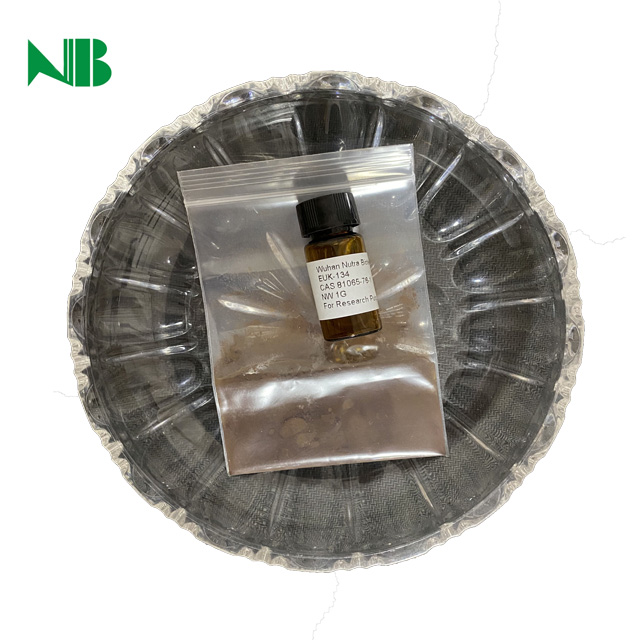
- AppearanceDark red-brown to brown powder
- Chemical ClassSalen-manganese (Schiff base) complex
- Related AnaloguesEUK-8, EUK-189, EUK-207
- CrystallinityPolycrystalline / amorphous powder
🔬 Quality Control & Handling
- Purity (HPLC)≥98%
- FormCrystalline powder
- IdentityUV-Vis (234/328 nm), LC-MS, Mn analysis
- Catalase-Like ActivityH2O2 consumption ~234 µM/min (in vitro)
- SOD-Like ActivityCytochrome c / NBT dismutation assay
- Loss on Drying≤1.0%
- Storage Condition-20°C, sealed, dry, dark
- Solution StorageFresh prep; DMSO stock -80°C short term
- SolubilityDMSO ~20; EtOH ~1; PBS ~0.2; water ~2 mg/mL
- GHS ClassificationGHS07 Warning; H315, H319
- QC DocumentationCOA / HPLC / UV-Vis / MS / MSDS
- Pack Sizes1g / 5g / 10g / 100g / 1KG
- Stock StatusIn Stock
- Use StatementResearch use only; not for clinical use
Catalytic Targets: The Reactive Oxygen and Nitrogen Species Cascade
EUK-134 does not bind a protein target - it catalytically consumes the reactive species themselves, intercepting the ROS cascade at three sequential points
How EUK-134 Works: One Molecule, Two Enzyme Activities, Catalytic Turnover
The manganese-salen scaffold cycles through multiple oxidation states, allowing it to perform sequential SOD and catalase chemistry indefinitely rather than being consumed once
SOD-Like Dismutation of Superoxide
The Mn(III)/Mn(II) redox couple at the centre of the salen ligand accepts and donates electrons, converting two superoxide anions (O2•-) into molecular oxygen and hydrogen peroxide - exactly the reaction catalysed by native superoxide dismutase. This removes the primary radical generated by mitochondrial respiration, NADPH oxidase and ischemia-reperfusion.
Catalase-Like Decomposition of H2O2
Unlike a pure SOD mimetic, EUK-134 does not leave hydrogen peroxide behind. The 3-methoxy (guaiacol) substituents on the salicylaldehyde rings - the structural modification that distinguishes EUK-134 from parent compound EUK-8 - markedly enhance catalase-like activity via a high-valent Mn(V)=oxo intermediate, decomposing H2O2 to water and oxygen at an initial rate of roughly 234 µM/min in vitro.
Blocking Hydroxyl Radical Generation
By removing both superoxide and hydrogen peroxide, EUK-134 starves the iron- and copper-catalysed Fenton and Haber-Weiss reactions of substrate, preventing formation of the hydroxyl radical - the most destructive ROS, for which no enzymatic scavenger exists in nature.
Peroxynitrite Detoxification
EUK-134 also reduces peroxynitrite (ONOO-), the highly reactive nitrogen species formed when superoxide reacts with nitric oxide. This limits protein tyrosine nitration, DNA strand breaks and PARP overactivation in inflammatory and ischemic tissue.
Catalytic, Not Stoichiometric
Conventional antioxidants such as ascorbate, N-acetylcysteine, tocopherol or glutathione are consumed 1:1 with each radical scavenged and can themselves become pro-oxidant radicals. EUK-134 turns over catalytically: a single molecule neutralises many ROS equivalents, which is why low micromolar concentrations produce durable cytoprotection.
Downstream Cytoprotection
The net effect is reduced lipid peroxidation, preserved mitochondrial membrane potential, blunted MAPK/p53 stress signalling and reduced apoptosis. In vivo, EUK-134 reduced infarct volume by more than 80% in a rat middle cerebral artery occlusion stroke model at 2.5 mg/kg and attenuated kainate-induced neuropathology at 10 mg/kg.
Research Applications of EUK-134 in Oxidative Stress and Radioprotection
A catalytic antioxidant used wherever superoxide and hydrogen peroxide drive pathology - from radiation biology to neurodegeneration and skin science
Radioprotection & Radiation Mitigation
Ionizing radiation kills largely through water radiolysis and ROS generation. Synthetic SOD/catalase mimetics of the EUK series mitigate capillary endothelial cell apoptosis after irradiation (Vorotnikova et al., Radiation Research 2010) and are studied as radioprotectants and radiation-mitigators for normal tissue sparing in radiotherapy and nuclear-exposure models.
Radiation BiologyNeurodegeneration & Neuroprotection
EUK-134 prevents oxidative stress and attenuates kainate-induced excitotoxic neuropathology in vivo (Rong et al., PNAS 1999) and is protective in rat middle cerebral artery occlusion stroke models. It is applied across Alzheimer's, Parkinson's and ALS models where mitochondrial ROS and protein oxidation are central.
NeuroscienceIschemia-Reperfusion Injury
The reperfusion burst of superoxide and hydrogen peroxide is the canonical target for a dual SOD/catalase mimetic. EUK-134 is used in cerebral, cardiac, renal and hepatic ischemia-reperfusion models - for example reducing renal dysfunction and injury in rat models of renal I/R.
I/R InjurySkin Photoprotection & UVB Damage
In primary human keratinocytes, EUK-134 inhibits membrane-damage-induced MAPK pathway activation and reduces p53 accumulation after UVB exposure (Decraene et al., J Invest Dermatol 2004). Under its INCI name, ethylbisiminomethylguaiacol manganese chloride, it is also used as a topical antioxidant active in cosmetic science research.
DermatologyMitochondrial Protection & Bioenergetics
Because mitochondria are the dominant source of cellular superoxide, EUK-134 is widely used to test whether a given phenotype is ROS-dependent - preserving membrane potential, complex I/IV activity and ATP output in models of mitochondrial dysfunction and oxidative phosphorylation stress.
MitochondriaAgeing & Lifespan Research
SOD/catalase mimetics of the EUK family are classic tools in the free-radical theory of ageing, including extension of lifespan in Caenorhabditis elegans and reduction of age-associated oxidative damage markers in mammalian tissue - a core reference point in anti-ageing ROS research.
Ageing / LongevitySkeletal Muscle Atrophy & Disuse
EUK-134 improves nNOS-mu translocation and reduces skeletal muscle fibre atrophy during short-term mechanical unloading, linking redox signalling to muscle mass regulation in disuse, immobilisation and microgravity models.
Muscle BiologyAmyloid Aggregation & Protein Misfolding
EUK-134 has been reported to inhibit amyloid fibril formation - including islet amyloid polypeptide (IAPP), beta-amyloid and lysozyme aggregation - and to disrupt pre-formed fibrils, improving viability of cells exposed to IAPP fibrils.
Protein MisfoldingInflammation & Acute Lung Injury
Endothelial-targeted liposomal EUK-134 alleviates acute pulmonary inflammation, and the compound is broadly used to test the ROS-dependence of NF-kappaB-driven cytokine responses, neutrophil recruitment and endothelial barrier dysfunction.
InflammationKey Publications on EUK-134 and Synthetic SOD/Catalase Mimetics
Foundational studies establishing the salen-manganese catalytic antioxidant class and its protective activity in vivo
| Authors & Title | Journal | Year | DOI / PMID |
|---|---|---|---|
| Baker K, Marcus CB, Huffman K, Kruk H, Malfroy B, Doctrow SR. Synthetic combined superoxide dismutase/catalase mimetics are protective as a delayed treatment in a rat stroke model: a key role for reactive oxygen species in ischemic brain injury. | Journal of Pharmacology and Experimental Therapeutics | 1998 | PMID: 9435181 |
| Rong Y, Doctrow SR, Tocco G, Baudry M. EUK-134, a synthetic superoxide dismutase and catalase mimetic, prevents oxidative stress and attenuates kainate-induced neuropathology. | Proceedings of the National Academy of Sciences USA | 1999 | 10.1073/pnas.96.17.9897 |
| Doctrow SR, Huffman K, Marcus CB, et al. Salen-manganese complexes as catalytic scavengers of hydrogen peroxide and cytoprotective agents: structure-activity relationship studies. | Journal of Medicinal Chemistry | 2002 | 10.1021/jm020207y |
| Decraene D, Smaers K, Maes D, Matsui M, Declercq L, Garmyn M. A synthetic superoxide dismutase/catalase mimetic (EUK-134) inhibits membrane-damage-induced activation of MAPK pathways and reduces p53 accumulation in UVB-exposed primary human keratinocytes. | Journal of Investigative Dermatology | 2004 | 10.1046/j.0022-202X.2004.22215.x |
| Vorotnikova E, Rosenthal RA, Tries M, Doctrow SR, Braunhut SJ. Novel synthetic SOD/catalase mimetics can mitigate capillary endothelial cell apoptosis caused by ionizing radiation. | Radiation Research | 2010 | 10.1667/RR1948.1 |
Available Pack Sizes & Ordering
Research-grade EUK-134 manganese salen complex (CAS 81065-76-1) with full QC documentation - from 1 g research packs to 1 KG bulk batches
Pack sizes: 1 g / 5 g / 10 g / 100 g / 1 KG
| Tier | Pack Size | Stock Status | Suitable For | Shipping & Lead Time |
|---|---|---|---|---|
| Standard | 1 g | In Stock | Cell-based ROS assays, SOD/catalase activity characterisation, in vitro screening | Same/next-day dispatch, ambient with ice pack |
| Medium | 5 g | In Stock | Rodent oxidative stress and neuroprotection studies, repeat dosing | Same/next-day dispatch, ambient with ice pack |
| Large | 10 g | In Stock | Radioprotection cohorts, ischemia-reperfusion and multi-organ studies | Same/next-day dispatch, double-bagged foil pouch |
| Bulk | 100 g | In Stock | Topical antioxidant formulation development, stability programmes | 2-5 business days, drum/foil pack, quote to confirm |
| Industrial | 1 KG | Made to order | Production-scale supply for cosmetic-science and CDMO programmes | Batch delivery, quote to confirm lead time |
💡 Reference sizes shown above; for exact pricing and availability please contact us for a quote. Bulk orders qualify for tiered discounts.
Frequently Asked Questions (FAQ)
Key questions on EUK-134 catalytic antioxidant chemistry, radioprotection, stability and handling
What is EUK-134 (CAS 81065-76-1)?
How is EUK-134 different from vitamin C, vitamin E or N-acetylcysteine?
What is the difference between EUK-134, EUK-8 and EUK-189?
Why is EUK-134 studied as a radioprotectant?
Does EUK-134 scavenge peroxynitrite as well?
How should EUK-134 be dissolved for cell and animal studies?
How stable is EUK-134, and how should it be stored?
What colour should EUK-134 powder be?
Is EUK-134 used in cosmetics as well as research?
What purity, documentation and pack sizes do you offer?
Need EUK-134 SOD/Catalase Mimetic for Your Oxidative Stress Research?
EUK-134 (CAS 81065-76-1) - catalytic ROS scavenger and radioprotectant, C18H18ClMnN2O4, MW 416.74, purity ≥98% with COA
Available in 1g / 5g / 10g / 100g / 1KG - request your quote today