
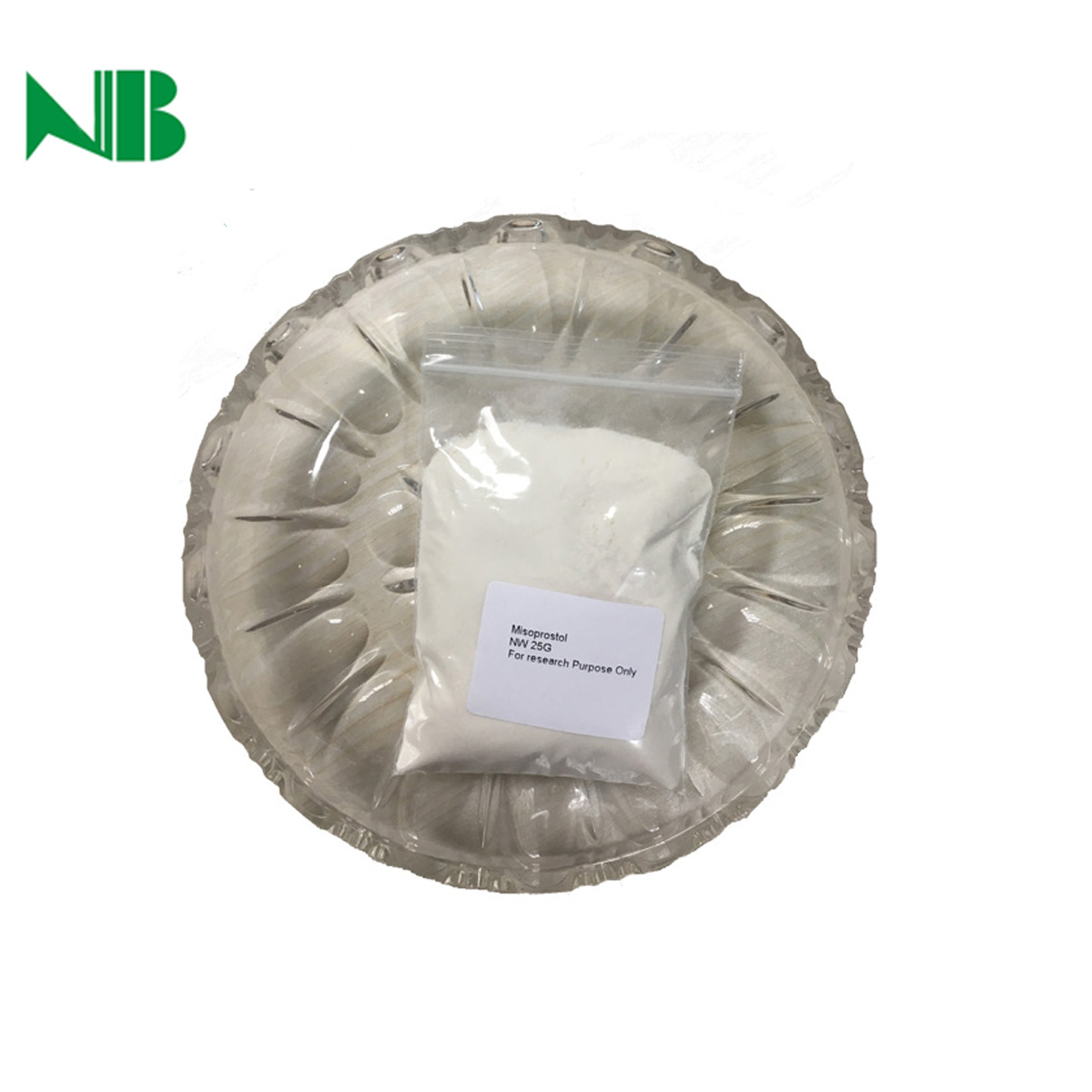
Misoprostol CAS 59122-46-2
Synthetic Prostaglandin E1 (PGE1) Analog & Pan-EP Receptor Agonist
Misoprostol (CAS 59122-46-2) is a synthetic, metabolically stabilized prostaglandin E1 (PGE1) analog and potent agonist at EP1-EP4 prostaglandin receptors (EP3-III Ki 0.319 µM). It protects gastric mucosa and stimulates uterine contraction. Molecular formula C22H38O5, MW 382.54. Research-grade with COA.
Molecular Information
CAS: 59122-46-2
Formula: C22H38O5
MW: 382.54 g/mol
Class: Prostaglandin E1 analog
Core: 9-oxo-11α,16-dihydroxy-16-methyl-prost-13E-en-1-oic acid methyl ester
Target: EP1-EP4 prostaglandin receptors
Affinity: EP3-III Ki 0.319 µM
MP: Low-melting solid
Appearance: White to off-white powder
Synonyms: Cytotec / SC-29333
Storage: -20 C
Product Technical Specifications
Complete physicochemical properties and QC parameters for Misoprostol (CAS 59122-46-2)
📋 Physicochemical Properties
- Product NameMisoprostol
- IUPAC Core(11α,13E)-(±)-11α,16-dihydroxy-16-methyl-9-oxoprost-13E-en-1-oic acid methyl ester
- CAS Number59122-46-2
- SynonymsCytotec; SC-29333
- Molecular FormulaC22H38O5
- Molecular Weight382.54 g/mol
- SourceSynthetic prostaglandin analog
- AppearanceWhite to off-white powder
- Melting PointLow-melting solid
- Water SolubilityLow (~1.6 mg/mL)
- Organic SolubilityDMSO >50 mg/mL; ethanol >50 mg/mL
- Compound ClassProstaglandin E1 analog / EP agonist
- HS Code2937.50
🔬 Quality Control & Handling
- Purity (HPLC)≥98%
- FormSolid powder
- Primary TargetProstaglandin E receptors EP1, EP2, EP3, EP4
- Pathway ReadoutcAMP modulation; intracellular Ca2+ (uterus); mucus/bicarbonate
- SelectivitySelective for EP over DP/FP/IP/TP (Ki >100 µM)
- Storage Condition-20 C, sealed, protect from light
- Solution StabilityAliquot DMSO/organic stocks; protect from light
- ShippingBlue ice / cold chain recommended
- QC DocumentationCOA / HPLC / NMR / MS / MSDS
- Pack Sizes1g / 5g / 10g / 100g / 1KG
- Stock StatusIn Stock
- Use StatementResearch use only; not for human/clinical use
Key Molecular Targets & Pathway Nodes
Misoprostol acts through the G-protein-coupled prostaglandin E (EP) receptor family; the tissue response depends on EP-subtype distribution and coupling (Gs vs Gi).
How Misoprostol Works: EP-Receptor Activation Drives Mucosal Protection & Uterine Tone
As a stable PGE1 analog, misoprostol binds EP receptors to protect the stomach and contract the uterus
De-esterification to Active Misoprostol Acid
Orally administered misoprostol methyl ester is rapidly de-esterified in vivo to misoprostol acid, the biologically active free acid that engages EP receptors with high affinity and metabolic stability.
Gastric Mucosal Protection (EP3-dominant)
In the stomach, EP3 (and EP4) activation on parietal and mucosal cells lowers cAMP in parietal cells, reduces acid secretion, and — via prostaglandin signaling — boosts mucus and bicarbonate, increases mucosal blood flow and tight-junction integrity, countering NSAID-induced ulceration.
Uterine Contraction (EP2/EP3/EP4)
In uterine smooth muscle, EP2/EP3/EP4 engagement raises intracellular Ca2+, driving coordinated, rhythmic contractions. This uterotonic effect underlies obstetric and gynecologic research uses (labor induction, miscarriage management, postpartum hemorrhage models).
⚖️ Misoprostol vs Other Prostaglandins
- Misoprostol (this product)Stable PGE1 analog; EP1-EP4 agonist; oral-active prodrug
- Natural PGE1Rapidly degraded; poor oral stability
- Dinoprostone (PGE2)EP2/EP3/EP4 agonist; different kinetic profile
- Shared MechanismGq/Gs-coupled EP receptors modulate cAMP & Ca2+
- Key DistinctionMethyl-ester prodrug improves oral bioavailability
- SelectivitySelective for EP over DP/FP/IP/TP (Ki >100 µM)
♻️ Downstream Biological Consequences
- Second MessengercAMP ↓ in parietal / ↑ in others
- IonCa2+ ↑ in uterine smooth muscle
- TissueIncreased mucus/bicarbonate & mucosal blood flow
- Smooth MuscleUterine contraction (uterotonic)
- ImmuneModulates neutrophils, ROS, IL-6, TNF-α
- BarrierTight-junction & mucosal protection
Research Applications & Models
From the gold-standard mucosal protectant to a uterotonic prostanoid probe, misoprostol spans gastroenterology and reproductive biology.
NSAID-Induced Gastric Ulcer Prevention
The canonical use: misoprostol protects gastric mucosa in NSAID users by restoring prostaglandin tone. Standard comparator for mucosal-defense and acid-suppression research.
EP3 / MucosaUterine Contraction & Obstetric Models
Uterotonic agent studied for labor induction, miscarriage management and postpartum-hemorrhage models via EP2/EP3/EP4 on myometrium.
EP2-EP4 / UterusInflammation & Immune Modulation
Modulates neutrophil superoxide, ROS, IL-6 and TNF-α in macrophage models; studied in acute-lung-injury and mucosal inflammation.
EP / ImmuneProstaglandin (EP) Receptor Research
A fiducial EP1-EP4 agonist for binding, cAMP and Ca2+ assays probing prostanoid signaling.
EP1-EP4Cartilage & Tissue Repair
Investigated for stimulating cartilage repair and tissue-regenerative prostaglandin pathways.
Tissue RepairCyclooxygenase / PG Pathway
Used to dissect downstream prostaglandin biology independently of COX inhibition.
COX/PG axisKey Literature & Landmark Publications
The pharmacology, receptor profiling and clinical context of misoprostol.
Available Sizes & Ordering
Research-grade Misoprostol (CAS 59122-46-2) with full QC documentation; standard packs and bulk custom quantities supported.
| Tier | Pack Size | Stock Status | Suitable For | Lead Time |
|---|---|---|---|---|
| Standard | 1g | In Stock | EP-receptor & mucosal-defense assays | Cold chain |
| Medium | 5g | In Stock | Gastric, uterine & inflammatory models | Cold chain |
| Large | 10g | In Stock | Long-term in vivo & formulation studies | Cold chain |
| Bulk | 100g | In Stock | Formulation & process development | Quote to confirm |
| Industrial | 1KG | Made to order | Pilot/production scale, CMO supply | Batch delivery |
💡 Reference sizes shown above; for exact pricing and availability please contact us for a quote. Bulk orders qualify for tiered discounts.
Frequently Asked Questions (FAQ)
What is misoprostol and what does it do?
How does misoprostol protect the stomach?
Why is misoprostol used for uterine contraction?
How potent is misoprostol at prostaglandin receptors?
How soluble is misoprostol and how should it be prepared?
Is QC documentation provided?
Need Misoprostol (PGE1 Analog) for Your Research?
Research-grade Misoprostol (CAS 59122-46-2) — purity ≥98% HPLC, COA included
The stable EP1-EP4 prostaglandin agonist for mucosal protection, uterotonic and prostanoid-signaling research — request a quote today


